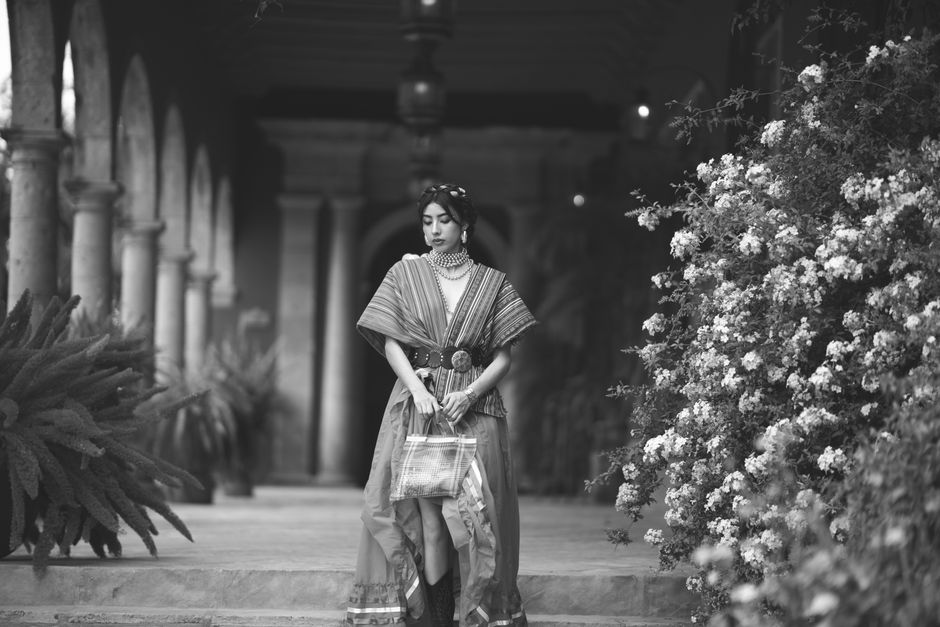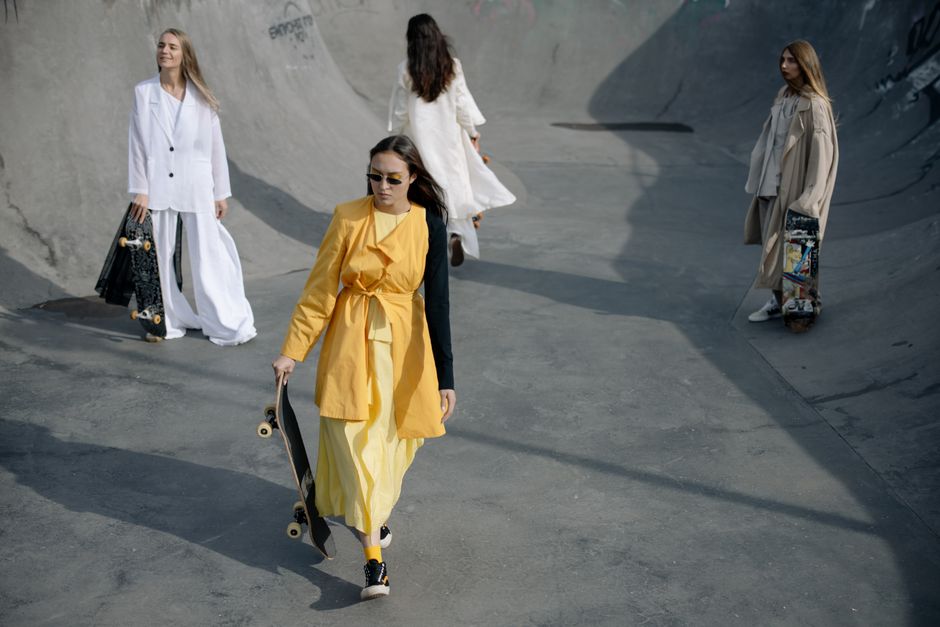
A power suit is not the only way to look capable. In a design studio, gallery, agency, or production office, a standard blazer-and-trouser set can look too formal, too expected, and strangely disconnected from the work. The better move is to keep the suit’s useful signals—clean lines, controlled proportion, and visual authority—while changing the format.
Choose the signal before choosing the outfit
The real job of workwear is not to make you look expensive. It needs to tell people that you can make decisions, move through a busy day, and still look intentional at 6 p.m. That signal can come from a defined shoulder, a long uninterrupted line, a disciplined color scheme, or one strong structural detail.
Authority comes from control
Loose clothing does not automatically look creative. It can look unfinished. Start with one controlled area: a sharp collar, a fitted waist, a clean trouser break, or a jacket that ends exactly at the hip. Let the rest of the outfit relax around it. This gives the eye a place to land and keeps the look from becoming costume-like.
Movement is part of the brief
Creative work often means carrying samples, sitting on the floor, climbing stairs, presenting ideas, or standing at an event for hours. Test the outfit while walking, reaching, and sitting. If the fabric pulls across the back, the waist cuts in when seated, or the hem catches under your shoe, the outfit has failed before accessories enter the picture. My verdict: choose a less formal shape with excellent movement over a sharper outfit that limits your day.
Compare the nine strongest suit replacements
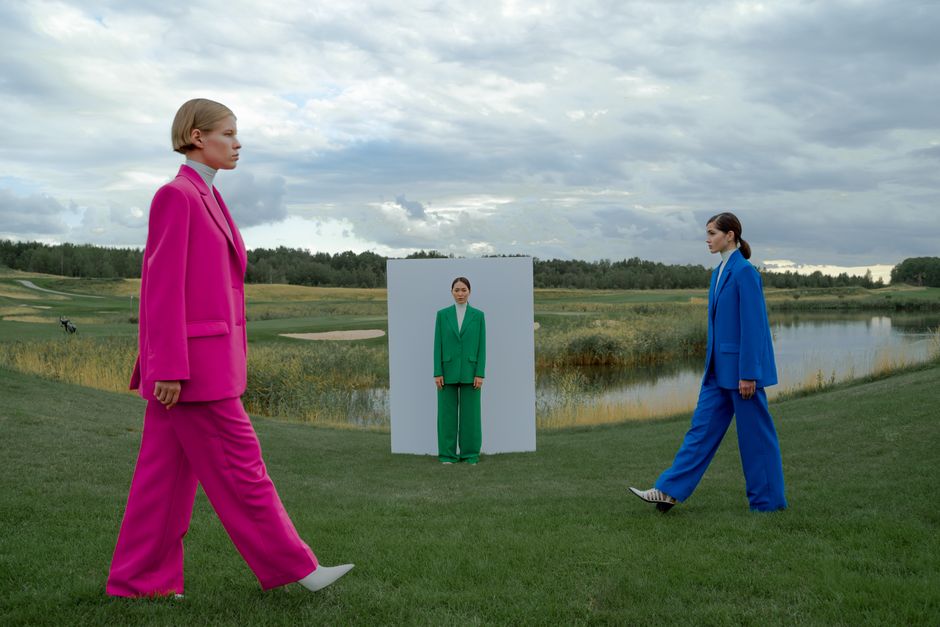
These nine formats keep enough structure for client meetings while giving you more range than a conventional two-piece. Prices below are listed examples, not fixed budgets; stock, currency, and seasonal reductions change quickly.
Use the table to match the format to the workday
| Alternative | Best use | Main risk | Starting budget |
|---|---|---|---|
| Vest and wide-leg trouser set | Presentations and studio meetings | Can look flat without a strong shoe | $100–$500 |
| Tuxedo jumpsuit | Opening nights and evening events | Bathroom logistics and tricky length | $120–$430 |
| Boiler suit | Hands-on studio or production days | Can read as literal workwear | $90–$300 |
| Midi dress with a short jacket | Client-facing office days | Too much softness without structure | $150–$600 |
| Skirt suit | Formal pitches and speaking roles | Can feel corporate if too narrow | $180–$700 |
| Fine-gauge knit co-ord | Travel and long desk days | Shows wrinkles and body lines | $100–$350 |
| Pleated trouser with sculptural top | Design-led workplaces | Volume can overwhelm a small frame | $150–$500 |
| Monochrome shirt dress | Gallery shifts and editorial meetings | Can look like a uniform | $100–$450 |
| Overshirt with matching trousers | Casual agencies and site visits | Needs a defined waist or cuff | $100–$400 |
The best first purchase is the vest set
For most women, the vest-and-trouser set wins because it can look sharp without copying office tailoring. Wear the vest alone with denim, split the trousers with a knit, or add a shirt when a meeting becomes more formal. It gives you three outfits from two pieces and avoids the rigid shoulder shape that makes a classic suit feel dated in a relaxed creative workplace.
One-piece dressing gives the cleanest visual line
My strongest pick for an event-heavy creative career is the tailored jumpsuit. It solves the main weakness of separates: the eye does not stop at a waistband, jacket hem, or shirt tuck. One uninterrupted line makes the body look taller and the outfit look more deliberate. That does not mean every jumpsuit works. A soft jersey style can look like evening loungewear, while a stiff one can feel like a costume.
Choose a tuxedo jumpsuit for public-facing work
A tuxedo jumpsuit is the most reliable dress replacement for an opening, panel, dinner, or client presentation. Look for a lapel, a defined shoulder, and a trouser leg that breaks lightly over the shoe. The REISS Tuxedo Wide-Leg Belted Jumpsuit in Black was listed at £270, while REISS also shows wide-leg and velvet versions in the same category. Its belt matters: it stops the long shape from swallowing the waist. For a cleaner, less evening-focused option, the Adrianna Papell Long Sleeve Crepe Jumpsuit with Tuxedo Collar was listed at $118.99.
Choose a boiler suit for hands-on creative work
A boiler suit is better for prop styling, set work, workshops, and days when you will not sit behind a desk. Pick a firm cotton or cotton blend, a straight leg, and a waist that can close over a thin knit. Avoid too many utility pockets unless you actually need them. Otherwise, the look becomes literal and loses its fashion point. A black, ink, olive, or tobacco version looks more polished than bright industrial orange.
Know when the jumpsuit is the wrong choice
Do not buy a jumpsuit if you use public bathrooms between meetings, need to layer bulky knitwear, or dislike tailoring alterations. A one-piece must fit the torso, rise, waist, hip, and hem at once. That is a lot of variables. For easier wear, choose a midi dress with a cropped jacket instead. You keep the vertical line but gain faster dressing and simpler alterations. My verdict: choose a jumpsuit for impact, but choose a dress-and-jacket combination for repeated weekday wear.
My verdict: start with a vest-and-trouser set

Buy the vest-and-trouser set first. It gives creative women the best balance of authority, flexibility, and repeat wear. A jacket can make an outfit look like standard office tailoring; a vest keeps the center of the body clean while leaving the shoulders and arms less restricted.
Build the set around the trouser
Choose trousers with a mid or high rise, a pressed front, and enough room for two fingers at the waistband. A wide leg should skim the shoe rather than pool on the floor. A straight leg is easier for cycling, commuting, and small studios. The vest should cover the waistband and end around the high hip. If it stops at the narrowest part of your torso, it creates a sharper line. If it ends at the widest part of your hip, it needs a longer, straighter cut to avoid a shelf effect.
Spend on fabric before decoration
For a dependable set, choose wool blend, tropical wool, dense crepe, or a viscose blend with some recovery. Thin polyester satin photographs cheaply and catches every crease. The Patrizia Pepe Mix fabric suit shows the kind of detail worth paying for: stretch velvet, a slim straight-leg line, and a composition of 90% polyester and 10% elastane; it was listed at €335. It is a better reference for fabric and line than for copying the exact look. For a lower price, the EVIE Sculpted Waist Long Sleeve Tailored Suit Set was listed at $79.99, but budget sets need a careful check of lining, seams, and return terms.
Five mistakes make alternatives look less polished
The problem is rarely that the outfit is too creative. The problem is that one practical detail has been ignored. Use these checks before buying.
The fit mistakes
- Too much volume everywhere: Wide trousers, an oversized top, and a long coat remove the waist and make the outfit look accidental. Keep one area close to the body.
- A trouser hem that drags: Measure the shoe you will actually wear. A hem for flats can look short with a boot, and a hem for heels can collect dirt on the commute.
- A vest that gaps: Pull the vest closed, sit down, and reach forward. If the buttons strain, size up and tailor the side seams instead.
The styling mistakes
- Too many statement pieces: A sculptural sleeve, giant earring, bright shoe, and printed bag compete for attention. Pick one lead element.
- Ignoring the work setting: A velvet jumpsuit may work at an opening but look theatrical at a daytime site visit. Match texture to the room, not only to your mood.
- Buying a dry-clean-only outfit for daily wear: Check the care label before falling for the silhouette. Creative work is often messy, and expensive maintenance changes how often you wear a piece.
My clear rule: if the outfit needs constant adjusting, special underwear, or a second pair of shoes to survive the day, it is not a practical power suit alternative.
Questions that settle the purchase

Can a knit co-ord replace a suit in a creative office?
Yes, if the knit has weight and shape. Choose a fine-gauge sweater with a matching column skirt or trouser, then add a leather belt or structured shoe. A loose, fuzzy set reads casual; a dense rib or compact merino version reads intentional. The best use is travel, internal meetings, and long desk days. It is not my first choice for a high-stakes pitch because knit fabric can lose its edge after several hours of sitting.
Is a dress more professional than a jumpsuit?
Not automatically. A dress with a strong shoulder, firm fabric, and controlled hem can look more authoritative than a badly fitted jumpsuit. The Mango Velvet Scarf-Collar Jumpsuit was listed at $99.99 and gives a useful example of how a collar can add structure to a one-piece. Choose the dress when you need easy layering and simple bathroom access. Choose the jumpsuit when you want a longer, uninterrupted line.
When should I skip a matching set?
Skip it when the pieces only work together, the fabric wrinkles quickly, or the color has no place in the rest of your wardrobe. A set is supposed to multiply outfits, not create one expensive uniform. Before buying, name three separate combinations for the trousers and three for the top. If you cannot, choose a monochrome shirt dress or a well-cut boiler suit instead.
Build a rotation, not nine separate costumes
You do not need nine full outfits. You need a small rotation that changes its level of formality without changing your identity.
- Wear the vest-and-trouser set with a white shirt for a presentation.
- Wear the same trousers with a sculptural knit for a studio day.
- Wear the vest over a fitted long-sleeve top for a gallery shift.
- Use a tuxedo jumpsuit with flat pointed shoes for an opening.
- Use the boiler suit with a narrow belt for a production day.
- Wear the midi dress with a short jacket when you need easy movement.
- Use the skirt suit with a simple tee to remove corporate stiffness.
- Wear the knit co-ord while traveling, then add a structured coat for the meeting.
- Use the monochrome shirt dress or overshirt set when the dress code is unclear.
For women in creative industries, the best power suit alternative is the one that keeps authority, movement, and repeat wear in the same outfit.