A carry-on sits open on the bed, half full of clothes and already impossible to close. The problem is rarely a lack of outfits. It is usually too many single-purpose pieces, too many colors, and shoes that take up more space than the rest of the wardrobe. A useful 10-piece capsule solves a practical travel problem: it gives you enough clean combinations for a week while keeping laundry, weather, and dress codes under control.
This is not legal advice — consult a licensed attorney for questions about customs rules, travel restrictions, or consumer disputes.
Begin with a seven-day outfit map
Count outfit roles, not random garments
A 10-piece wardrobe works when each item has a job. Start with two tops for warm days, one long-sleeve base, one knit layer, two bottoms, one simple dress or jumpsuit, one light jacket, and two pairs of shoes. That gives you ten clothing decisions without counting underwear, sleepwear, swimwear, or accessories. The key is overlap: the long-sleeve top should work under the knit, the dress should work with both shoes, and the jacket should close over every top.
- Choose two tops in the same color family.
- Add one long-sleeve layer for cool trains, planes, and evenings.
- Pick one sweater or cardigan that fits over the other tops.
- Use one dark bottom and one lighter or softer bottom.
- Add one dress or jumpsuit only if it creates at least three outfits.
- Choose a weather layer that can handle wind or light rain.
- Pack one walking shoe and one polished, compact alternative.
Use the three-outfit test
Before an item enters the bag, style it three ways using only the other nine pieces. A black trouser that works with both tops, the sweater, and the jacket earns its space. A bright blouse that needs a special skirt, special bra, or special shoe fails the test. The best capsule is not a miniature version of your full closet. It is a small system with repeated connections.
Keep the palette narrow enough to mix
The strongest color plan
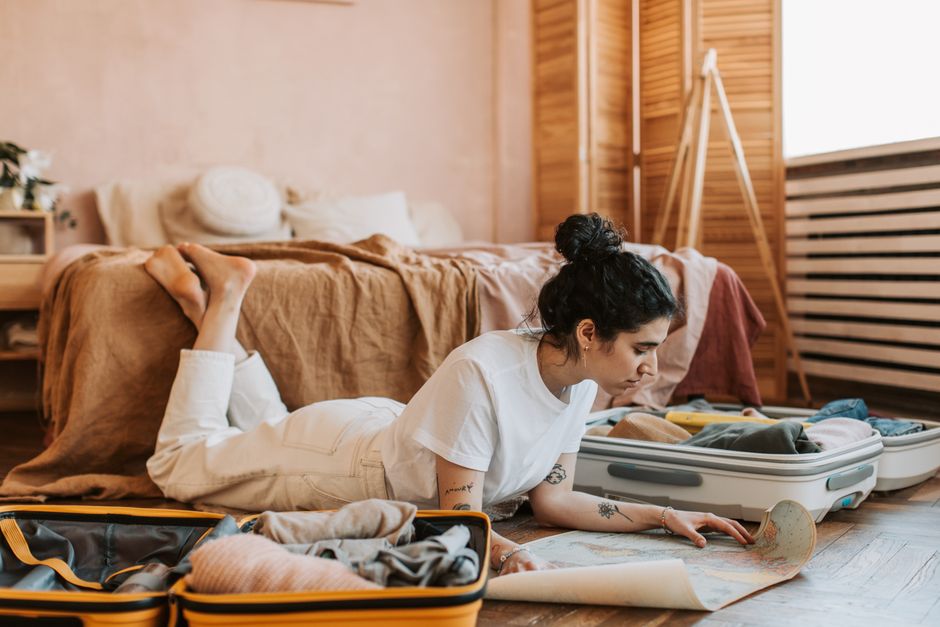
Choose one dark anchor, one light neutral, and one accent. Navy, cream, and burgundy create more useful contrast than six unrelated colors, while black, white, and olive suit a more casual trip. My clear verdict: use two neutrals plus one accent, because that gives the wardrobe visual variety without making every outfit a separate styling problem.
Where color should appear
Put the accent on one top, one accessory, or the dress, not across several difficult pieces. A rust sweater can sit over cream, navy, denim, and black. A rust trouser is harder to repeat if the trip includes formal dinners or wet weather. Keep shoes and the outer layer neutral; they are the pieces most likely to be worn every day. The result may look restrained on the packing list, but it gives you more than ten possible outfits once you change the layer order, tuck a top, or add a belt. Avoid matching every item exactly. A capsule should coordinate, not look like a uniform.
Choose fabrics for washing, drying, and weather
Why fabric performance matters more than fiber labels
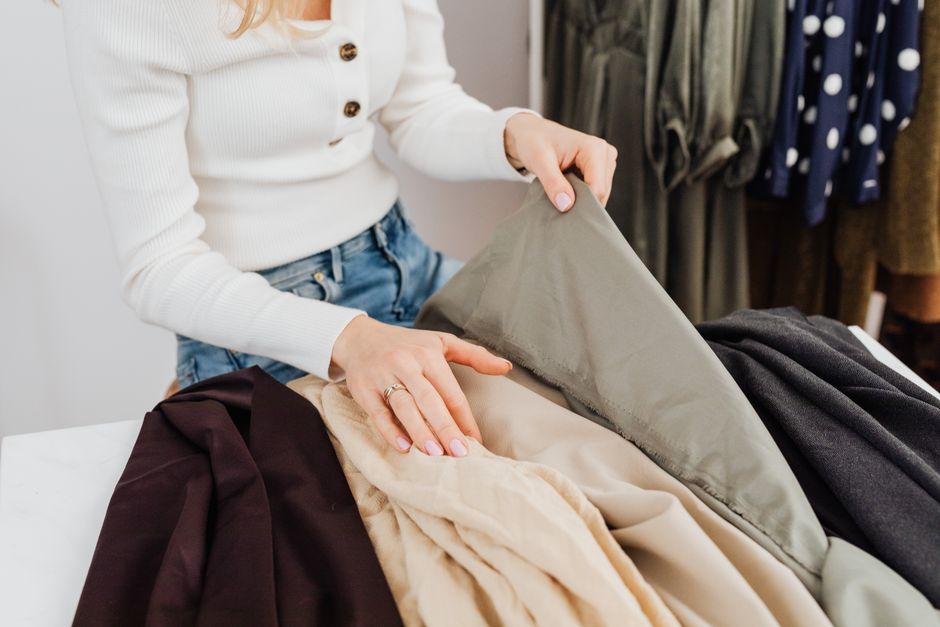
Travel clothing must survive three conditions at once: repeated wear, limited washing, and unpredictable temperature changes. A soft cotton shirt can feel perfect on day one but stay damp in a hotel bathroom. A heavy wool sweater may resist odor but occupy too much space for a warm destination. The useful question is not simply whether a fabric is natural or synthetic. Ask how quickly it dries, how easily it wrinkles, how much odor it holds, and how it behaves after a full day of sitting, walking, and carrying a bag.
Merino works well for a base layer or thin sweater because it regulates temperature and often stays wearable after more than one use. Polyester or nylon makes sense for a rain shell and quick-drying top. Cotton remains comfortable in hot, dry cities, but it needs more drying time and usually shows creases. A small amount of elastane can improve recovery in trousers, yet too much stretch may make a polished pair look tired by dinner.
Build a two-wash travel rhythm
Plan one small wash around the middle of the trip instead of packing seven complete days. Wash the lightest tops and underwear in the evening, press out water with a towel, and hang them where air can move. Do not wash a thick sweater unless the care label allows it; spot-clean the collar and cuffs instead. Pack a detergent sheet or a small amount of travel detergent, but keep liquids within the airline limit.
Match the layer to the climate
For hot and humid travel, choose a loose cotton or technical top, a light trouser, and a thin layer for aggressive air conditioning. For cool cities, use a merino base, a medium knit, and a wind-resistant jacket. For wet destinations, a cotton coat is a poor first layer because it dries slowly. The best compact combination is a water-resistant shell over a breathable middle layer. Buy the weather layer first; it determines what can comfortably sit beneath it.
Use the ten-piece table as a buying filter
A practical 2026 starting set
The following list is a framework, not a demand to buy ten new garments. Use pieces already in your closet first, then replace only the weak link. Prices are approximate US list prices and can change by color, season, or sale.
| Piece | Role | Example | Approx. price or spec |
|---|---|---|---|
| 1 | Everyday top | Uniqlo U Crew Neck T-Shirt | About $19.90; cotton jersey |
| 2 | Second top | Everlane Organic Cotton Box-Cut Tee | About $30; relaxed fit |
| 3 | Long-sleeve base | Uniqlo Heattech Crew Neck | About $19.90; thin warm layer |
| 4 | Light knit | Uniqlo Extra Fine Merino Crew Neck Sweater | About $49.90; fine merino knit |
| 5 | Dark bottom | Uniqlo Smart Ankle Pants | About $49.90; stretch woven fabric |
| 6 | Second bottom | Everlane Way-High Jean | About $98; high-rise denim |
| 7 | One-piece outfit | COS Regular-Fit Jersey Midi Dress | About $99; packable jersey |
| 8 | Warm outer layer | Patagonia Women’s Nano Puff Jacket | $239; 309 g and 60-g synthetic insulation |
| 9 | Walking shoe | Adidas Stan Smith | About $100; low-profile leather sneaker |
| 10 | Polished alternative | Rothy’s The Point | About $159; flexible knit flat |
What earns the highest value
For a cool or mixed-weather trip, the Patagonia Nano Puff is the strongest outerwear choice because its 309-gram weight and compressible synthetic insulation give it real warmth without a bulky coat. For a city trip with mild evenings, the Uniqlo merino sweater costs far less and may be enough. The Everlane jean is the casual anchor, while the Uniqlo Smart Ankle Pants handle dinners and long travel days with less visual bulk. My pick for the first purchase is the weather layer, followed by the dark bottom; those two pieces control the most outfits.
Avoid the packing mistakes that break the system
Five failure modes
- Counting accessories as outfit solutions. A scarf can change an outfit, but it cannot replace a clean top.
- Packing two heavy shoes. Wear the larger pair in transit and pack the lighter pair in a shoe bag.
- Choosing a beautiful item with no partner. If it works with only one other piece, it is a poor capsule choice.
- Ignoring the destination dress code. A beach cover-up does not replace a shoulder-covering layer for museums, religious sites, or formal spaces.
- Buying for an imaginary climate. Check the forecast, average evening temperature, and rain pattern before adding a thick coat.
When ten pieces are the wrong number
Ten pieces are too few for a business trip with several formal meetings, a winter trip below freezing, or an itinerary that combines a beach with a cold mountain town. In those cases, add a second weather layer or a formal shoe rather than pretending the original count will work. Ten pieces are also unnecessary for a two-night weekend; five or six well-matched garments may be enough. The goal is not to win a minimalist challenge. It is to carry the smallest wardrobe that covers the actual trip.
Pack by outfit sequence, then remove two pieces
Use a simple packing order
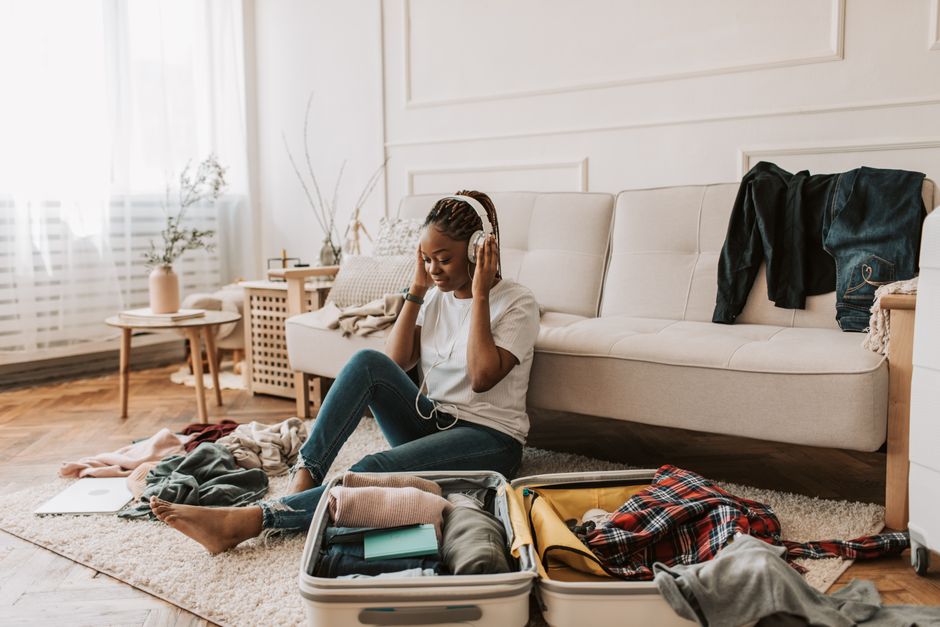
Lay out the travel-day outfit first, then create a warm-day outfit, a cool-day outfit, a dinner outfit, and a laundry-day outfit. Photograph the combinations before folding them. This exposes duplicates quickly: two tops may perform the same role, or the dress may never work with the chosen jacket. Pack the heaviest shoes and jacket on your body, roll soft tops, fold structured trousers along their seams, and leave one small section of the bag open for laundry.
The final edit
Remove the piece that creates the fewest complete outfits and the piece that duplicates another item. If the bag still closes easily, keep the space. Extra capacity is useful for a wet jacket, local purchases, or a change in weather. A successful travel capsule should feel slightly boring before departure and remarkably flexible after arrival. You should know what to wear without rebuilding the entire bag each morning. For disputes about airline baggage limits, customs declarations, or return rights, this is not legal advice — consult a licensed attorney.