
Why does your winter outfit look fine indoors but feel too cold outside, too bulky on public transport, and impossible to remove once the heating starts? The problem is usually not a lack of clothes. It is poor layering. A thick sweater under a narrow coat traps your arms, while a thin fashion boot leaves your feet cold. The best layered winter outfits use three different jobs: a close base layer, a warm middle layer, and a weather-resistant outer layer. Knits, coats, and boots then work as one system.
Why winter layers feel bulky and cold
Warmth comes from trapped air
Clothing keeps you warm by holding small pockets of air near the body. A base layer moves sweat away from your skin. A knit creates loft and holds warm air. A coat blocks wind and rain. Each layer should add a different function. If every layer is thick, the outfit becomes stiff without becoming much warmer.
The most useful starting point is a thin fabric that sits close to the body. Merino wool, lightweight synthetic jersey, and fine ribbed cotton all work for different weather. Avoid a loose first layer with bulky seams. It creates folds under the sweater and forces you to buy a larger coat.
Fit controls both warmth and shape
Leave roughly 2 to 4 cm of room between your knit and coat at the chest and upper arm. That space lets air move and gives you enough freedom to bend your elbows. A coat that fits perfectly over a T-shirt may fail over a cable knit. Check the shoulder seam, sleeve length, and button closure while wearing your thickest planned layer.
Keep only one layer oversized. A relaxed coat can balance a slim base and medium-weight sweater. An oversized sweater needs a straighter coat and a cleaner boot. This simple rule prevents the rounded, padded silhouette that makes winter clothes look heavier than they are.
How to build a three-layer winter outfit

Use the same order for most cold-weather outfits, then adjust fabric weight instead of adding random pieces.
- Start with a close base. Choose a smooth long-sleeve top or fine turtleneck. It should touch the body without pulling across the shoulders.
- Add one insulating knit. Choose merino, cashmere, alpaca, or a dense cotton blend. Medium gauge is the safest choice for daily wear because it adds warmth without taking over the outfit.
- Pick the coat for the weather. Wool handles dry cold and city wear. A padded or water-resistant coat works better for wind, sleet, and long outdoor periods.
- Protect the openings. Cover the neck, wrists, ankles, and feet. A scarf and tall socks often add more useful warmth than another bulky shirt.
- Match the boot to the ground. Look for a grippy sole, enough toe room, and a shaft that meets the trouser hem. Smooth leather soles are a poor choice on wet pavement.
The key is restraint. Most people need three clothing layers, not five. If you still feel cold, improve the base layer, socks, or coat wind protection before adding another sweater. Extra fabric around the torso does little when cold air enters at the neck and ankles.
The best knit, coat, and boot combinations
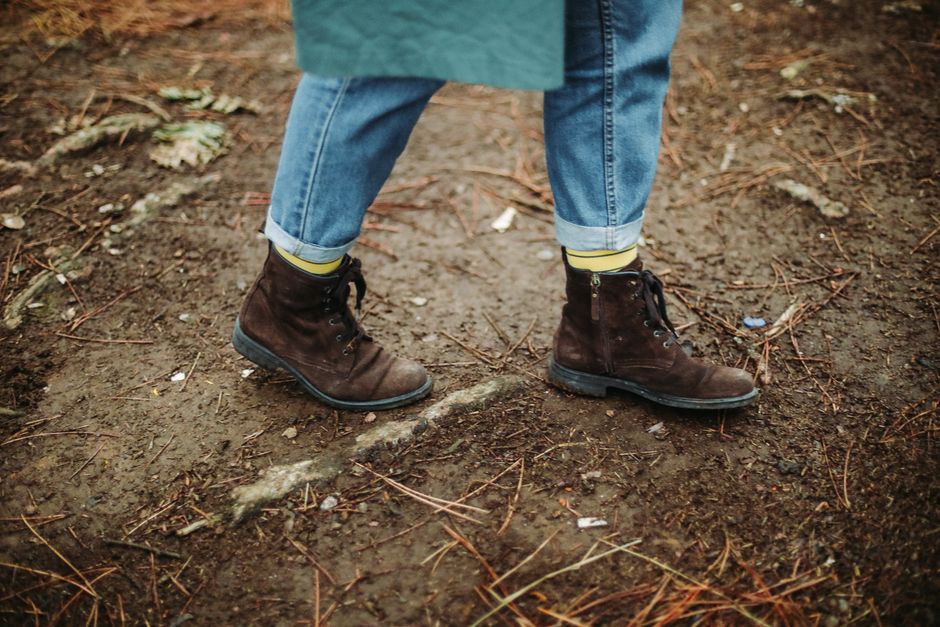
My strongest recommendation is a slim base, medium merino knit, structured coat, and practical leather boot. This combination looks polished, works for commuting, and gives you room to adjust indoors. The products below are useful reference points, not required purchases. Their prices are typical US list prices and can change.
For a polished city outfit
Build the outfit around the Uniqlo HEATTECH Extra Warm Crew Neck Long Sleeve T-Shirt at about $39.90, a medium crew-neck knit, and the Everlane Italian Wool Peacoat at about $298. The base layer stays close to the body, while the peacoat gives the outfit a defined shoulder and a clean hip-length finish. Add straight-leg trousers and the Blundstone 585 Classic Chelsea at about $220. Its elastic sides make it quick to remove, and the leather upper works with denim, wool trousers, and skirts.
This is the best formula for offices, restaurants, and short outdoor walks. Keep the knit in charcoal, cream, navy, or camel. Use the coat as the main color statement. The verdict is clear: for a city wardrobe that needs one dependable outfit, the peacoat and Chelsea boot combination wins because it looks refined without demanding delicate styling.
For wet, colder days
Choose the Smartwool Classic Thermal Merino Base Layer in the 250-weight range, usually around $115, under a dense wool sweater. Finish with a longer insulated coat and the Sorel Joan of Arctic boot, commonly priced near $240. This outfit is warmer and more weather-ready than the peacoat formula, but it also has more visual weight.
Balance the thicker boot with straight or gently tapered trousers. Do not pair it with a very wide trouser leg unless the boot shaft is tall enough to keep the hem from dragging. For wet commutes and long outdoor walks, this is the better choice. The tradeoff is simple: you gain warmth and grip, but lose some of the sleek shape that makes a Chelsea boot useful indoors.
How should a coat and boots fit over knitwear?
Should the coat be oversized?
Choose a coat one step roomier than your spring jacket, but do not size up automatically. Put on the sweater you will actually wear and test three movements: raise both arms, cross them over your chest, and sit down. If the back pulls or the sleeve rides above the wrist, the coat is too small. If the shoulder drops several centimetres and the collar gaps, it is too large.
A knee-length coat gives the most warmth because it covers more of the thighs. A hip-length coat feels easier for driving and indoor use. For most people, a coat that reaches the upper thigh gives the best balance between warmth, movement, and proportion.
How much room should boots have?
Leave about 1 cm between your longest toe and the front of the boot. Try boots with the socks you will wear in winter. Your heel should stay mostly in place when walking, but your toes must be able to move. Tight boots compress insulation and can feel colder than a slightly less expensive pair with a better fit.
Match the shaft to the hem. An ankle boot works with cropped trousers and skirts. A taller boot handles snow, wet grass, and wide-leg trousers better. Choose a rubber sole with visible tread for frequent outdoor use. A smooth sole may look elegant, but it is a weak choice on polished stone or icy pavement.
Six mistakes that ruin layered winter outfits

Most failed winter outfits do not fail because the wearer bought the wrong color. They fail at the points where warmth, movement, and proportion meet.
- Using a thick base layer. A bulky shirt under a sweater steals space from the coat and creates wrinkles. Start thin and add warmth in the middle layer.
- Buying the coat before testing the knit. Try the coat over your heaviest planned sweater. Shoulder tension is hard to fix with styling.
- Ignoring the neck. An open neckline lets warm air escape. A high collar or scarf often improves comfort more than a second torso layer.
- Pairing a wide knit with a narrow coat. The sweater bunches at the arms and creates a stiff shape. Use a straight coat or choose a finer knit.
- Choosing boots by appearance alone. Check sole grip, toe room, waterproofing, and sock space. A fashionable boot that pinches is not a winter solution.
- Wearing the same outfit in dry cold and rain. Wool can handle dry cold well, but prolonged rain needs a water-resistant outer layer and a boot that seals out moisture.
Also avoid buying a large collection before identifying your real gap. If your coat already works but your feet stay cold, buy better socks or boots. If every sweater feels tight under the coat, replace the coat before adding more knitwear. The best winter wardrobe fixes the weakest layer first.
Which layered winter outfit should you choose?
The right formula depends on how long you stay outside, how much walking you do, and how formal the setting is. The table below gives a direct choice.
Fast comparison for everyday dressing
| Situation | Best formula | Main strength | Main tradeoff |
|---|---|---|---|
| Office commute in dry cold | Thin thermal, medium knit, wool peacoat, Chelsea boot | Polished and easy to remove indoors | Less protection in heavy rain |
| Long outdoor walk | Merino base, wool or fleece knit, insulated coat, lugged boot | Warmth, grip, and better wind protection | Heavier and less formal |
| Rainy city day | Smooth base, fine knit, water-resistant coat, sealed rubber-soled boot | Handles moisture without excess bulk | Technical fabrics look less traditional |
| Mostly indoor winter dressing | Long-sleeve tee, lightweight cardigan, short coat, ankle boot | Comfortable in heated rooms | Needs an extra layer outside |
The final verdict
For most wardrobes, start with the dry-city formula: a thin base, one medium knit, a structured wool coat, and a grippy leather boot. It covers the widest range of outfits and avoids unnecessary bulk. Move to the insulated, water-resistant formula only when your commute, climate, or walking time demands it. Good layering is not about wearing more. It is about giving every layer one clear job.