You buy a plain white tee from a mall brand. After three washes, the collar looks like a wrinkled potato chip. The fabric pills under your arms. The hem twists to one side. You throw it out six months later.
That’s not normal. That’s bad manufacturing dressed up as a bargain. A well-made cotton T-shirt, a solid pair of raw denim jeans, or a wool sweater should outlive your phone, your laptop, and probably your car lease. Here’s how to tell the difference before you hand over your card.
Fabric Is Not Just Fabric — Learn the Fiber Language
Most people grab a shirt and think “feels soft” equals quality. Softness can be a lie. Polyester brushed to feel like peach skin will disintegrate in two years. Real quality starts with the fiber itself.
Natural vs. Synthetic Blends: The Honest Breakdown
100% natural fibers (cotton, linen, wool, silk, cashmere) age better than synthetics — but only if the fiber quality is high. Short-staple cotton pills. Long-staple cotton (Egyptian, Supima, Sea Island) gets softer with every wash. A 100% Supima cotton T-shirt from Buck Mason or Lady White Co. ($60–$90) will outlast five $15 H&M tees combined.
Synthetics aren’t all bad. A small percentage of elastane (2–5%) gives recovery to denim or knits without ruining longevity. But anything over 10% elastane is a red flag — the stretch fibers fatigue and sag within a year. Nylon in a wool sock (like Darn Vermont’s 70% merino / 30% nylon blend) actually extends life. Polyester in a dress shirt is a shortcut to pilling hell.
Weight Matters More Than You Think
A 6 oz cotton jersey is a summer tee. A 10 oz cotton jersey is a winter layering piece that won’t warp. Same fiber, different durability. Check the GSM (grams per square meter) if listed. For denim, 12 oz is light, 14 oz is standard, 16 oz+ will last decades. Naked & Famous makes a 14 oz raw selvedge jean ($160) that breaks in like armor. Uniqlo’s 12 oz selvedge ($50) is fine for casual wear but won’t survive daily abuse.
| Garment Type | Minimum GSM/Oz | What to Look For |
|---|---|---|
| T-shirt (cotton jersey) | 180 GSM / 6 oz | Long-staple cotton, tight knit |
| Denim jeans | 12 oz | Selvedge edge, no stretch over 2% |
| Wool sweater | 5-ply or 7-gauge knit | Super 150s or lower (lower = tougher) |
| Linen shirt | 160 GSM | Irish or Belgian flax, slubbed texture |
Construction Tells the Real Story — The Seams Don’t Lie

Fabric is the raw ingredient. Construction is the chef. A great fabric sewn badly falls apart. A mid-grade fabric sewn well can last a decade.
Check the seams. A flat-felled seam (two rows of stitching folded over) is standard on quality denim and chinos. A simple overlocked seam (serged edge, one line of thread) is fine for stretchy knits but will unravel on woven shirts. Turn the garment inside out. If you see raw edges with no binding or felling, put it back.
Buttonholes should be dense, not loose. A cheap buttonhole looks like a sloppy keyhole. A quality buttonhole has tight zigzag stitching that won’t fray after five years. On a men’s dress shirt from Kamakura Shirts ($90), the buttonholes are hand-finished. On a $30 Charles Tyrwhitt shirt, they’re machine-made but still tight. On a fast-fashion shirt, they’re barely threaded.
Zippers matter. YKK is the global standard for a reason. If you see a no-name zipper with thin teeth on a jacket, expect it to fail in two winters. A Riri or Lampo zipper (found on Acne Studios or Our Legacy coats) is overbuilt — it’ll outlast the fabric.
The Three Failure Points Every Garment Has — Check These First
Every piece of clothing fails in the same three places. If you inspect these before buying, you’ll catch 90% of durability problems.
- The collar. On a button-down, the collar points should be fused with a stiff interlining, not just folded fabric. On a T-shirt, the neckband should be a separate piece of ribbing, not a folded-over hem. A folded hem collar will wave and curl after three washes.
- The crotch. On jeans and trousers, the crotch seam should have a gusset or a reinforced double-stitch. Single-stitch crotches blow out in six months if you bike or squat. Levi’s 501s ($70) use a riveted crotch. Cheap chinos don’t.
- The hem. A shirt hem should be chain-stitched, not lock-stitched. Chain-stitching allows the fabric to stretch with movement. Lock-stitching is rigid and pops. Look for the chain of loops on the inside hem of a quality shirt.
Grainline and Pattern Matching — The Mark of a Careful Maker
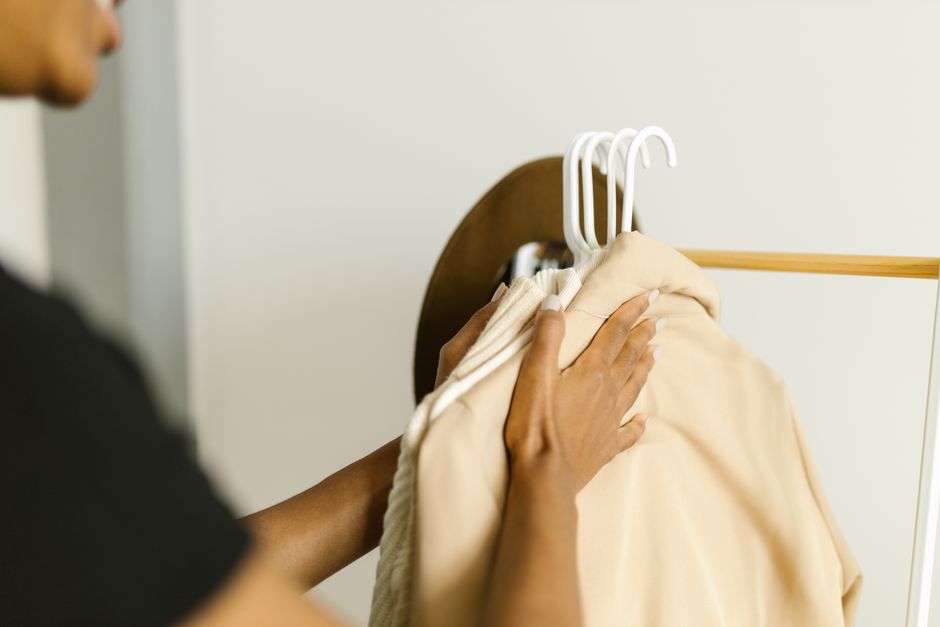
This is the easiest test to run in a store. Look at a plaid shirt or striped shirt. Do the patterns line up at the seams? If the stripes don’t match where the front meets the side panel, the manufacturer didn’t waste fabric to align the pattern. They cut corners literally.
Grainline is harder to see but more important. Fabric has a grain — the direction the threads run. A garment cut off-grain will twist after washing. The side seam of a well-cut T-shirt should hang straight down, not spiral around your body. To test, hold the shirt by the shoulder seams and let it hang. If one side seam pulls forward, the grain is off. Put it down.
Brands like Sunspel, The Real McCoy’s, and 3sixteen cut on-grain for every piece. Fast fashion brands cut on the bias of the grain to save fabric, which guarantees twisting. That’s why your Uniqlo tee looks like a corkscrew after a year.
When NOT to Buy Expensive Basics — The Honest Tradeoffs
Not every high-price tag means high quality. And not every cheap item is junk. Here’s where the logic flips.
Don’t buy expensive cashmere for daily wear. A $300 cashmere sweater from Brunello Cucinelli will pill if you wear it under a backpack strap. Cashmere is delicate — it’s a luxury fiber, not a workhorse. If you need a warm sweater that survives the office commute, buy a heavy merino wool (Icebreaker, $120) or a cotton-cashmere blend (Uniqlo, $50). The pure cashmere is for date night, not Tuesday.
Don’t buy expensive linen for travel. Irish linen wrinkles beautifully, but it also tears more easily than a cotton-linen blend. For a travel shirt that won’t rip in a suitcase, buy a 55% linen / 45% cotton blend from Alex Mill ($95). It breathes almost as well and lasts twice as long.
Don’t buy expensive denim if you hate stiff jeans. Raw selvedge denim (14 oz+) requires a break-in period of 30–60 wears before it feels comfortable. If you want soft jeans out of the box, buy a sanforized (pre-shrunk) pair from Levi’s Premium line ($90) or a washed pair from Everlane ($68). The raw denim will last longer, but only if you tolerate the stiffness.
The Verdict: Build a Decade Wardrobe by Spending on These Four Items
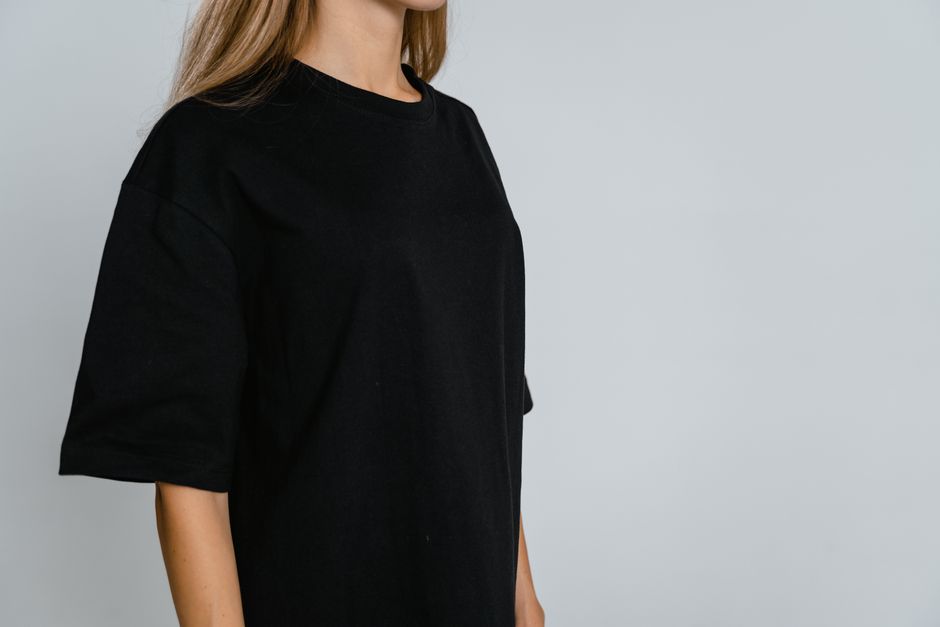
If you only upgrade four categories, focus here. These are the pieces where paying more gives you the biggest durability return.
- Denim jeans. A pair of 14 oz raw selvedge jeans from Naked & Famous ($160) or Iron Heart ($350) will last 10+ years with occasional repairs. Budget option: Levi’s 501 STF ($70).
- Wool sweater. A heavy merino or Shetland wool sweater from SNS Herning ($200) or Harley of Scotland ($150) won’t pill, won’t sag, and gets better with age. Budget option: Uniqlo merino crewneck ($40) — replace every two years.
- White cotton oxford shirt. A 2-ply, long-staple cotton oxford from Mercer & Sons ($110) or Brooks Brothers ($90) will hold its collar shape and button alignment for a decade. Budget option: Spier & Mackay ($60).
- Heavyweight T-shirt. A 10 oz, 100% Supima cotton tee from Lady White Co. ($90) or Buck Mason ($60) won’t shrink, won’t pill, and won’t lose its hem. Budget option: Uniqlo U Crew Neck ($20) — good for two years, then donate.
The next time you pick up a shirt, don’t ask “Is this a good deal?” Ask “Will this look the same in 2036?” The answer is in the seams, the fiber, and the grain. Learn to read those three things, and you’ll never waste money on a six-month shirt again.