Most plus-size dress advice is garbage. It tells you to “drape” and “camouflage” and “minimize.” That’s fear-based styling, and it makes you look like you’re apologizing for existing.
The real problem is simpler: you’re buying the wrong silhouette for your specific body geometry. Fix the shape, fix the outfit.
Here’s the direct breakdown of the five core plus-size dress silhouettes in 2026 — what they actually do, who they work for, and the exact brands doing them right.
Why Silhouette Matters More Than Size or Color
A size 22 dress cut like a sack will always look like a sack. The number on the tag is irrelevant. The silhouette — the overall shape the dress creates against your body — is the only thing that determines whether you look put-together or sloppy.
Every dress silhouette solves a specific structural problem. Some add curves where you want them. Some streamline where you don’t. Some create visual balance. None of them “hide” anything.
Your job is to match the silhouette to your body’s natural proportions. That’s it.
Three questions you must answer before buying any dress:
- Where is my widest point? (Hips? Shoulders? Belly?)
- Where is my narrowest point? (Waist? Ankles? Bust?)
- What do I want the eye to focus on? (Face? Décolletage? Legs?)
Answer those honestly, and the silhouette choice becomes obvious.
The Five Core Silhouettes — What Each Actually Does
There are exactly five dress shapes worth your time in 2026. Everything else is a variation. Here’s the honest breakdown.
A-Line: The Universal Equalizer
What it does: Fitted at the shoulders, flares gradually to the hem. Creates a triangle shape that balances broad shoulders or a larger bust with wider hips.
Best for: Apple, rectangle, and inverted triangle body shapes. If you carry weight in your stomach or have narrow hips, the A-line adds visual width below the waist, creating an hourglass illusion.
Real example: The Universal Standard Seamoss Dress ($138) in a cotton-lyocell blend. Hits at midi length, has a hidden waist seam, and the flare starts just below the ribcage. It doesn’t cling to the belly.
Mistake to avoid: Too much flare. An A-line that’s wider than your shoulder span makes you look wider than you are. The hem should be roughly equal to your shoulder width.
Wrap Dress: The Bust-and-Waist Miracle
What it does: Crosses over the front, ties at the side or back. Creates a deep V-neck and a cinched waist. Adjustable fit — you control the tightness.
Best for: Hourglass and pear shapes. If you have a defined waist and a larger bust, the wrap dress is the most flattering silhouette ever invented. Period.
Real example: The Eloquii Double Georgette Wrap Dress ($129.95). Made from a drapey georgette that doesn’t add bulk. The wrap crosses high enough to avoid gaping at the bust. Comes in sizes 14-28.
Failure mode: Cheap wrap dresses gape open at the bust when you sit down. Look for interior snap closures or a hidden button at the crossover point. If the fabric is stiff (polyester taffeta), skip it.
Fit-and-Flare: The Waist-Definer
What it does: Fitted through the bodice and waist, then flares out from the hips. Basically a 1950s silhouette updated.
Best for: Hourglass and pear shapes who want to emphasize their waist. The fitted bodice shows off your upper body; the full skirt balances wider hips.
Real example: Tadashi Shoji Plus Size Fit-and-Flare Dress ($295). Uses a stretch crepe bodice that actually fits without pulling at the buttons. The skirt has enough structure to hold its shape without adding bulk.
When NOT to buy: If you carry most of your weight in your stomach (apple shape), the fitted bodice will emphasize that area. You’ll be uncomfortable all night. Skip this for A-line.
Sheath: The Streamliner
What it does: Straight cut from shoulder to hem. No waist definition. Follows the body’s line without being tight.
Best for: Rectangle and hourglass shapes who want a sleek, professional look. Sheath dresses work best when the fabric has some weight — ponte knit, scuba, or double knit.
Real example: Universal Standard Mirage Dress ($118). In a heavy 10-ounce ponte knit. Hits just above the knee. Has a subtle seam at the natural waist that defines without cinching.
Critical spec: Sheath dresses need 4-way stretch fabric. If the fabric only stretches in one direction, it will ride up and bunch at the hips. Check the fabric content — at least 5% spandex.
Empire Waist: The Long-Line Illusion
What it does: Seam sits just below the bust. Skirt flows straight down. Hides the entire midsection.
Best for: Apple shapes and anyone who wants to de-emphasize their stomach. Also works for petite plus-size women because it creates a long vertical line.
Real example: Kiyonna Plus Size Empire Waist Maxi Dress ($98). The seam sits high enough that it doesn’t cut across the fullest part of the bust. The skirt is cut on the bias, so it drapes instead of poufing.
Mistake to avoid: Empire waists can make you look pregnant if the seam is too high or the fabric is too stiff. The seam should sit exactly at your underbust, not your natural waist. Measure before buying.
Silhouette-by-Body-Shape Cheat Sheet
| Body Shape | Best Silhouette | Why | Skip This |
|---|---|---|---|
| Apple (weight in belly) | A-line, Empire waist | Adds width below, skims the midsection | Fit-and-flare, Sheath |
| Pear (weight in hips/thighs) | Wrap, Fit-and-flare | Balances shoulders with hips, defines waist | Sheath (emphasizes hip width) |
| Hourglass (defined waist, balanced bust/hips) | Wrap, Fit-and-flare, Sheath | Any silhouette that shows the waist works | Empire waist (hides your best feature) |
| Rectangle (little waist definition) | A-line, Wrap | Creates curves where there are none | Sheath (emphasizes straight line) |
| Inverted Triangle (broad shoulders) | A-line, Empire waist | Adds volume below to balance the top | Fit-and-flare (adds too much top volume) |
The Fabric Trap — Why the Same Dress Looks Different on You
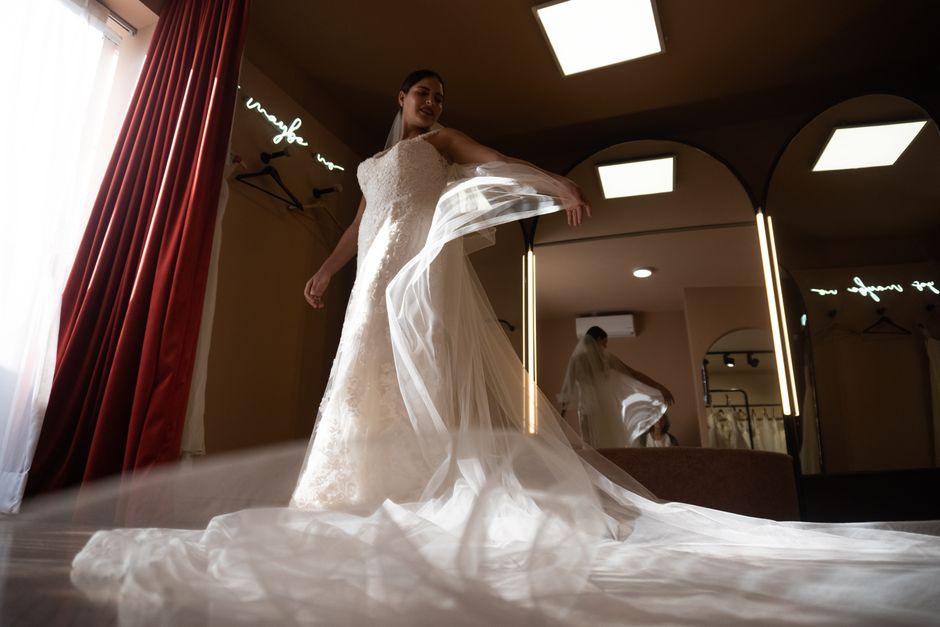
Two dresses can have the exact same silhouette and look completely different. The difference is fabric weight and drape.
Lightweight fabrics (chiffon, rayon, viscose) cling to every curve. They show belly bumps, hip dips, and bra lines. If you buy an A-line in a thin rayon, it will wrap around your stomach like a second skin. That’s not the silhouette’s fault — it’s the fabric.
Heavy fabrics (ponte, scuba, double knit, denim) hold their shape. They skim over the body instead of sticking. A sheath dress in ponte knit will look smooth and polished. The same sheath in jersey will wrinkle and sag within an hour.
Rule: For plus sizes, look for fabric weights of 200 gsm or higher. Anything below that is too flimsy for structured silhouettes. Check the product specs — if the brand doesn’t list fabric weight, assume it’s too thin.
Three Mistakes That Ruin Any Plus-Size Dress
These are the errors I see constantly. Avoid them and you’re already ahead of 90% of shoppers.
1. Buying the wrong length. A midi dress that hits at the widest part of your calf makes your legs look shorter. The hem should land either above the knee (at the narrowest part of your thigh) or below the widest part of your calf (mid-calf or ankle). Anything in between is unflattering.
2. Ignoring the armhole. A dress that fits perfectly in the body but has armholes that gape or cut into your armpit will ruin the whole look. Brands like Eloquii and Universal Standard design armholes specifically for plus-size proportions. Fast-fashion brands don’t.
3. Forgetting the undergarment. Every silhouette depends on what’s underneath. A wrap dress needs a strapless bra or adhesive cups. A sheath dress needs shapewear that doesn’t roll down. A fit-and-flare needs a full-coverage bra. Plan your undergarment before you buy the dress.
When to Ignore the “Rules”

The body-shape guides above are starting points, not prison sentences. Some women with apple shapes look amazing in fitted sheath dresses. Some hourglass women hate wrap dresses.
The real test is this: Do you feel like you can move freely? A dress that restricts your movement, makes you pull at the fabric, or requires constant adjustment is the wrong dress — regardless of silhouette.
Also: trends change. In 2026, the looser, more relaxed silhouettes (shift dresses, trapeze cuts) are having a moment. These work for almost every plus-size body because they don’t demand a defined waist. If you like the look, wear it. The “rules” are guidelines, not laws.
But if you want the most flattering fit for your specific body, start with the cheat sheet above. Pick one silhouette. Buy one dress. See how it feels. Adjust from there.
Your most flattering fit is the one you stop thinking about five minutes after putting it on.