Roughly 70% of men own at least one dress jacket, but a significant portion cannot correctly identify its type or appropriate use. Many mistake a blazer for a sport coat, or a suit jacket for either. This misunderstanding limits versatility and often leads to mismatched outfits. Knowing the nuances ensures you always look polished and appropriate, regardless of the occasion.
Blazer, Sport Coat, or Suit Jacket: What’s the Real Distinction?
Distinguishing between blazers, sport coats, and suit jackets can seem complex. Each serves a distinct purpose. They have unique characteristics in fabric, structure, and intended pairing. Understanding these differences unlocks a more refined wardrobe. It enables smarter dressing choices for any event.
| Feature | Blazer | Sport Coat | Suit Jacket |
|---|---|---|---|
| Fabric | Typically worsted wool, serge, flannel. Often solid navy or dark colors. | Wider range: tweed, corduroy, linen, cotton, patterned wools. Textural. | Matches trousers exactly. Fine worsted wool, flannel, fresco. |
| Structure | More structured than a sport coat, less than a suit jacket. Often metal or contrasting buttons. | Least structured. Softer shoulders, patch pockets, often unlined. Very casual. | Most structured. Padded shoulders, canvassed construction, flap or jetted pockets. |
| Pairing | Designed to be worn with contrasting trousers (e.g., grey flannels, chinos). | Designed for casual, separates wear. Pairs with jeans, chinos, corduroys. | Only worn with matching trousers as part of a complete suit. |
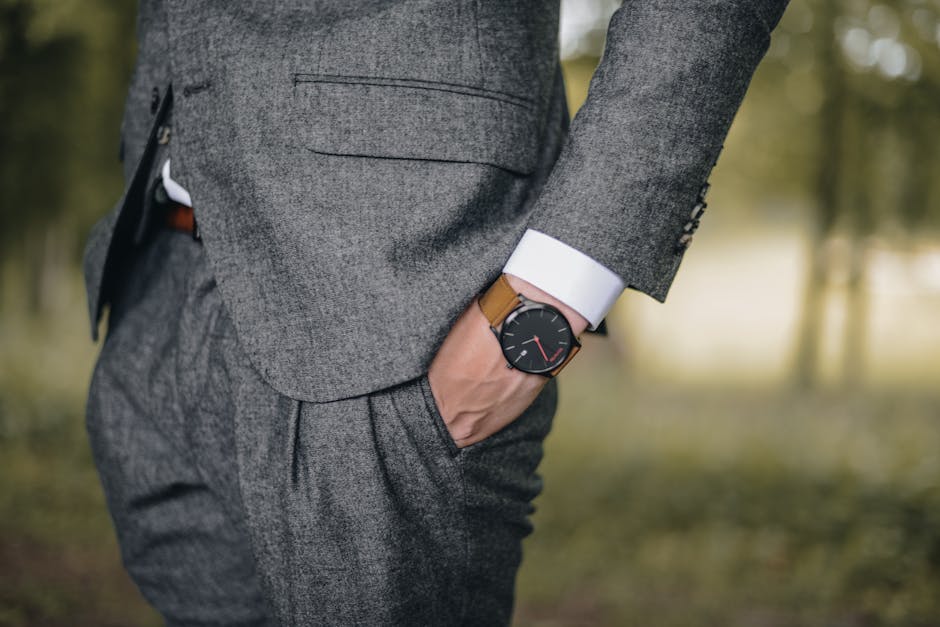
| Formality | Smart casual to business casual. More formal than a sport coat. | Casual to smart casual. Least formal of the three. | Formal to business professional. Most formal. |
Understanding Fabric and Buttons
The fabric is a primary differentiator. A classic navy blazer often uses serge or hopsack wool. Its buttons are typically polished brass or mother-of-pearl, contributing to its distinct look. Sport coats, on the other hand, embrace texture. Think herringbone tweed from brands like Harris Tweed, or a rugged cotton twill. Their buttons match the fabric or offer a subtle contrast. A suit jacket’s fabric is specifically chosen to complement its matching trousers, usually a smoother, less textured worsted wool or a fine flannel. The buttons are always chosen to blend seamlessly with the jacket material.
The Role of Pockets and Venting
Pockets also provide clues. Blazers frequently feature patch pockets, sometimes with a breast pocket. These pockets are sewn onto the outside of the jacket. Suit jackets almost exclusively use flap pockets or jetted pockets, integrated cleanly into the jacket’s body for a sleek profile. Sport coats often have patch pockets, but also frequently incorporate bellows pockets or ticket pockets, emphasizing their utilitarian, casual roots. Venting, the slit(s) at the back, varies too. Suit jackets often have double vents for a more traditional look. Blazers commonly feature double or single vents. Sport coats, especially those with a more relaxed fit, might feature single vents or even no vents at all.
The Single Most Versatile Dress Jacket

For most men, the navy hopsack blazer stands out as the single most versatile dress jacket. Its structured yet comfortable fit, combined with a rich texture, allows it to transition across many settings. It pairs effortlessly with grey trousers for a business casual look or with dark wash jeans for an elevated weekend outfit. This piece effectively bridges the gap between casual comfort and tailored sophistication. Its adaptability makes it an essential wardrobe item for anyone looking to refine their style.
Fabric Matters: Wool, Cotton, Linen, and Their Roles
The material of a dress jacket dictates its drape, comfort, and suitability for different climates and occasions. Choosing the right fabric is as critical as choosing the right fit. It determines how the jacket feels, looks, and performs throughout the day or night.
Wool: The All-Season Performer
Wool is the undisputed champion of dress jacket fabrics. Its natural breathability and wrinkle resistance make it ideal for almost any climate, provided the weave is appropriate. Worsted wool, a smooth, tightly woven variety, is common for suit jackets. It offers a crisp drape and a polished appearance. Flannel wool, known for its soft, brushed texture, adds warmth and a luxurious feel, perfect for cooler months. Hopsack wool, often used for blazers, has a looser weave, making it more breathable and less prone to wrinkling. Brands like Loro Piana and Vitale Barberis Canonico are renowned for their high-quality wool fabrics, offering different weights from 220 GSM (grams per square meter) for summer to over 300 GSM for winter.
Cotton: Casual Comfort and Durability
Cotton jackets offer a more relaxed, casual aesthetic. They are often less structured than wool alternatives. Cotton twill, corduroy, and seersucker are popular choices. Cotton breathes well, making it suitable for warmer weather, but it wrinkles more easily than wool. A cotton sport coat in a khaki or olive hue pairs excellently with chinos or denim. It provides a comfortable, laid-back yet still put-together look. Look for cotton jackets with a softer shoulder and minimal lining to enhance their casual appeal. Uniqlo and J.Crew often feature well-made cotton and cotton-blend sport coats suitable for everyday wear.
Linen: The Summer Essential
Linen is the quintessential summer fabric. Its open weave provides exceptional breathability and cooling properties. Linen jackets are lightweight and inherently casual, embracing a relaxed, intentionally wrinkled look. They are perfect for warm-weather events or tropical climates. While it wrinkles easily, this characteristic is part of its charm. A linen sport coat in light blue, beige, or off-white is an excellent choice for garden parties, beach weddings, or casual summer evenings. Combining linen with cotton or silk blends can reduce wrinkling while retaining much of the breathability. Brands such as Canali and Suitsupply often incorporate linen and linen blends into their spring/summer collections, offering stylish options from full suits to unstructured sport coats.
Finding Your Perfect Fit: A Step-by-Step Guide

An ill-fitting jacket negates the benefits of even the finest fabric or most expensive brand. Fit is . A jacket should drape cleanly without pulling or excessive fabric. Here is how to assess the fit:
- Shoulder Seam Alignment: The shoulder seam should sit precisely where your shoulder ends. If it extends past, the jacket is too big. If it rides up, it is too small. A clean shoulder line is critical.
- Jacket Length: For most men, the jacket’s hem should cover your rear. It should end around the mid-crotch point. For shorter men, slightly shorter can be acceptable. For taller men, it might extend slightly past. The goal is balance.
- Sleeve Length: The jacket sleeve should end at your wrist bone. Approximately half an inch of your shirt cuff should show below the jacket sleeve. This proportion is classic and sharp.
- Chest and Torso: The jacket should button comfortably without strain. There should be no pulling across the chest or back when buttoned. A good test is to slip your hand between your chest and the buttoned jacket; it should fit snugly but not tightly.
- Lapel Lay: Lapels should lie flat against your chest. They should not gape or stand away from your body. This often indicates a poor fit in the chest or shoulders.
- Collar Gap: The jacket collar should rest against your shirt collar, with no gap between the two. A gap suggests the jacket is too large in the neck or poorly cut for your posture.
Occasion-Specific Choices: When to Wear What
For true sartorial success, match the jacket to the event’s formality. An exquisite tweed sport coat at a black-tie event is as out of place as a formal suit jacket at a casual brunch. The context is everything.
The best dress jackets for men are those that align perfectly with the dress code and atmosphere of the occasion. It’s not about owning the most expensive jacket; it’s about owning the right jacket for the moment. This clarity elevates personal style significantly.
Business Professional and Formal Events
For these settings, a **suit jacket** is non-negotiable. Its structured nature and matching trousers convey authority and respect. Think a charcoal grey or navy worsted wool suit. For exceptionally formal events, a black tuxedo jacket with matching trousers is the standard. This means a single-breasted, peak-lapel jacket from a brand like Hugo Boss or a more bespoke tailor. Avoid mixing and matching. The suit jacket’s purpose is to be part of a cohesive ensemble. Its formality is intrinsic to its design. A two-button, notch-lapel jacket is standard for business; peak lapels elevate it for more formal gatherings.
Business Casual and Smart Casual
This is where the **blazer** shines. A classic navy blazer, with its distinct metal or contrasting buttons, is a cornerstone of smart casual dressing. Pair it with grey flannel trousers, cream chinos, or even dark denim. Brooks Brothers offers iconic blazers that exemplify this style. Alternatively, a finely woven wool sport coat in a subtle pattern, such as a subtle plaid or herringbone, works equally well. Brands like Ralph Lauren excel at providing sophisticated sport coats that bridge this gap. This provides a polished look without the rigidity of a full suit. It allows for more personality through fabric and pattern choices. Think an unstructured blazer from a brand like Boglioli, which offers comfort and understated elegance.
Casual and Relaxed Settings
For more relaxed environments, a **sport coat** is your go-to. This is where you can experiment with texture, pattern, and color. A tweed sport coat for a fall weekend, a cotton corduroy jacket for a casual dinner, or a linen sport coat for a summer evening are all excellent choices. These jackets pair effortlessly with jeans, robust chinos, or even tailored shorts in some contexts. They are often softer in construction, less padded in the shoulders, and feature patch pockets, signaling their casual intent. Brands known for their casual yet refined sport coats include J.Crew and Todd Snyder. The key here is comfort and individual expression, without sacrificing a sense of intentional style.
Common Dress Jacket Questions Answered
Should a dress jacket ever be worn with shorts?
Generally, a traditional dress jacket like a suit jacket or even a classic blazer should not be paired with shorts. However, a highly unstructured, lightweight sport coat, particularly one made of linen or seersucker, can work with tailored shorts in very specific, casual summer settings. Think a resort-wear aesthetic, not a formal event. The shorts must be tailored, not cargo or athletic shorts, and the look leans heavily into casual sophistication.
What’s the difference between a sport coat and a sports jacket?
There is no practical difference. The terms “sport coat” and “sports jacket” are often used interchangeably to refer to the same garment: a casual, stand-alone jacket meant to be worn with contrasting trousers. The term “sports jacket” historically referred to jackets worn for sporting activities, which evolved into the versatile, separate garment we know today as a sport coat. Both terms denote the same style of informal outerwear.
Can a suit jacket be worn as a stand-alone blazer or sport coat?
Typically, no. A suit jacket is designed to be worn with its matching trousers. Its fabric, often smoother and less textured than a sport coat or blazer, makes it look incomplete when worn alone. The lack of contrasting buttons also makes it less visually distinct from the matching trousers. Wearing a suit jacket as a separate often signals that you’ve lost the matching trousers or are trying to make a suit jacket function in a way it wasn’t intended. The structure is also often more rigid, which clashes with casual pairings.