A prevailing misconception in the outerwear market suggests that a four-figure price tag is a reliable proxy for leather quality. Shoppers often assume that if a jacket costs two thousand dollars at a luxury boutique, the hide must be inherently superior to a five-hundred-dollar alternative found online. This is rarely the case. In reality, the price of a leather jacket is frequently inflated by retail markups, licensing fees, and marketing budgets rather than the actual cost of the animal hide or the labor involved in the stitching. When searching for the best leather jacket online store, the objective should not be to find the most expensive item, but rather to identify retailers that prioritize hide selection, tanning methods, and hardware durability over brand prestige.
Evaluating Leather Quality and Construction Standards
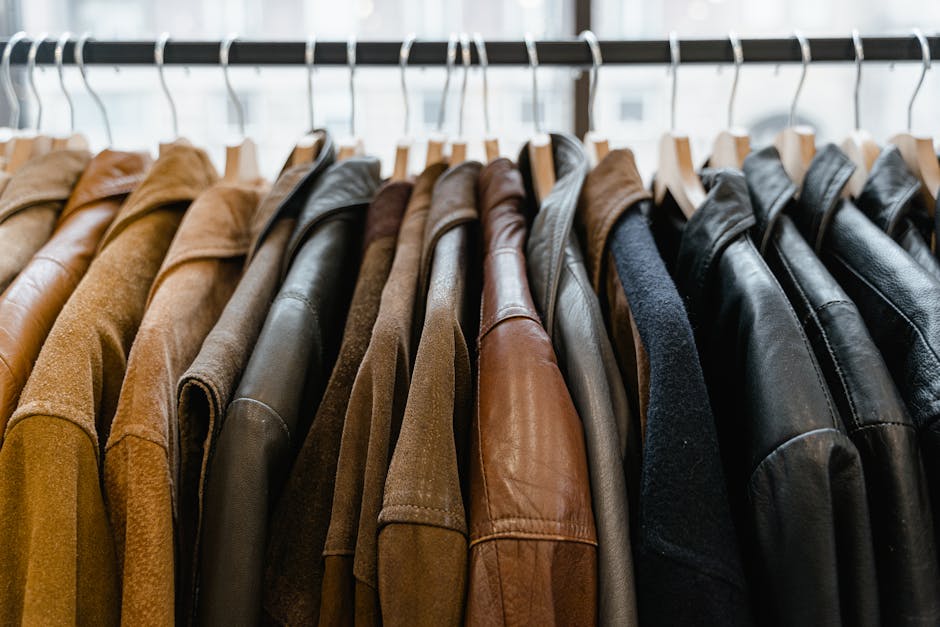
Before selecting a specific online store, you must understand what constitutes a well-made garment. Leather is not a monolithic material; it is a biological product with vast variations in density, grain, and finish. Most high-street retailers use corrected-grain leather, which has been sanded down to remove imperfections and then stamped with an artificial grain. While this looks uniform, it lacks the longevity and character of full-grain leather. Full-grain leather retains the outermost layer of the hide, including the natural fibers that provide strength and the ability to develop a patina over time.
Construction is equally vital. A jacket is only as strong as its weakest seam. When browsing online listings, look for mentions of “v-stitch” or reinforced areas at high-stress points like the armpits and pockets. Hardware is another tell-tale sign of quality. Premium stores will explicitly mention their zipper brands—usually YKK (specifically the Excella line), RiRi, or Talon. If a store uses generic, unbranded zippers, it is a strong indicator that they have cut corners on the internal components as well. Finally, consider the lining. A high-quality jacket should feature a breathable lining like Bemberg or heavy-duty cotton twill, rather than cheap, sweaty polyester that will tear within a season.
Key Technical Specifications to Look For
- Hide Type: Steerhide and horsehide offer maximum durability but require a long break-in period. Lambskin is buttery soft and ready to wear immediately but is more prone to tearing.
- Tanning Method: Chrome-tanned leather is supple and water-resistant. Vegetable-tanned leather is stiffer, more eco-friendly, and ages beautifully, though it is more sensitive to moisture.
- Stitch Density: Higher stitches-per-inch (SPI) generally indicate a more meticulous manufacturing process and a stronger bond.
Best Direct-to-Consumer Stores for Value
The rise of the direct-to-consumer (DTC) model has fundamentally changed how we purchase leather. By eliminating the middleman, these stores can offer high-grade hides at prices that were previously impossible. However, the DTC space is crowded, and not every brand delivers on its promises. You have to be discerning about which brands are actually investing in their supply chain versus those just running aggressive Instagram ads.
Thursday Boot Co: The Entry-Level Standard
Thursday Boot Co has successfully transitioned from footwear to outerwear by applying the same value-focused philosophy. Their jackets typically retail between $350 and $500. They utilize lambskin and cowhide sourced from reputable tanneries. The Keanu or Racer models are standout choices for those seeking a slim, modern silhouette. While the leather is thinner than what you would find on a heritage biker jacket, it is perfectly suited for daily urban wear. The pros include an accessible price point and a surprisingly high level of finish for the cost. The main con is the lack of heavy-duty, “lifetime” durability found in thicker hides; these are fashion jackets first and protective gear second.
The Jacket Maker: Customization for Every Body Type
One of the biggest hurdles in buying leather online is the fit. Leather doesn’t stretch or drape like wool; if the shoulders are off by half an inch, the whole look is ruined. The Jacket Maker solves this by offering a robust made-to-measure service for a nominal flat fee (usually around $30-$50 extra). Their Ionic Black Leather Biker Jacket (approx. $350) is a popular starting point. The pro here is the fit—you can specify sleeve length, chest width, and torso height. The con is that because they produce such a high volume of custom orders, the hide consistency can occasionally vary between batches.
Heritage and Luxury Retailers for Lifetime Investment
If your budget allows for a “buy it once, wear it forever” purchase, heritage brands are the gold standard. These companies often have decades—or even a century—of experience in pattern making and hide sourcing. They don’t follow trends; they set the archetypes that everyone else copies. When you buy from these stores, you are paying for a piece of history and a garment that will likely outlive you if properly maintained.
Schott NYC: The Original American Biker
Schott NYC is the brand that literally invented the motorcycle jacket. The 618 Perfecto (approx. $900) is the jacket worn by Marlon Brando and the Ramones. It is made from heavy steerhide that feels like armor when you first put it on. The pro is the unmatched durability and historical accuracy; this jacket will develop a incredible character over twenty years. The con is the break-in period. For the first few weeks, you will feel like you are wearing a cardboard box. It requires patience and physical effort to soften the leather through wear.
Belstaff: The British Trials Tradition
For a more refined, European aesthetic, Belstaff is the premier online destination. Their Trialmaster Panther Jacket (approx. $1,700) is a masterpiece of functional luxury. Made from hand-waxed calf leather, it offers a level of water resistance and sophistication that rugged American bikers lack. The pro is the prestige and the exceptional tailoring that flatters the wearer’s frame. The con is the price; you are certainly paying a premium for the Phoenix logo on the sleeve, and the hardware, while high-quality, can be overly flashy for some tastes.
| Brand | Primary Hide | Price Range | Best For |
|---|---|---|---|
| Thursday Boot Co | Lambskin/Cowhide | $350 – $480 | First-time buyers |
| Schott NYC | Steerhide/Horsehide | $850 – $1,200 | Rugged durability |
| The Jacket Maker | Various (Custom) | $300 – $600 | Hard-to-fit body types |
| Belstaff | Calfskin | $1,100 – $2,500 | Luxury/Refined style |
Custom and Made-to-Order Specialized Stores
For the enthusiast who knows exactly what they want—down to the color of the stitching and the type of pocket zippers—the best online stores are those that operate on a made-to-order (MTO) basis. These stores don’t hold inventory, which reduces waste and allows them to spend more on premium materials. The trade-off is the wait time, which can range from four weeks to three months.
Falcon Garments is a notable player in this niche. Born from the DNA of the legendary (and now defunct) Temple of Jawnz, Falcon Garments offers jackets that rival the quality of $3,000 designer labels for under $1,000. Their DR1 (Double Rider) in black lambskin is a favorite among fashion purists. The leather is incredibly high-grade, sourced from the same tanneries used by Rick Owens or Saint Laurent. The pro is the absolute precision of the design and the quality of the skins. The con is the lack of a traditional return policy; because the jacket is made for you, you generally cannot return it if you simply change your mind.
Another option is Aero Leather Clothing, based in Scotland. They are the masters of horsehide. If you want a jacket that feels like a vintage piece from the 1940s, Aero is the place. Their online ordering process is old-school, often involving email consultations to ensure the measurements are correct. The pro is the sheer density of the horsehide and the artisan construction. The con is that the styles are very specific to vintage workwear and might feel too “costume-like” for someone wanting a contemporary look.
Understanding Tanning and Hide Types Before You Buy
A common mistake when shopping online is ignoring the species of animal the leather came from. This isn’t just about ethics; it’s about physics. Different animals provide hides with different structural properties. If you buy a cowhide jacket expecting it to be soft and light, you will be disappointed. Conversely, if you buy a lambskin jacket for a motorcycle trip, you are making a dangerous mistake.
Cowhide vs. Steerhide vs. Horsehide
Cowhide is the most common leather. It is tough, relatively thick, and has a moderate grain. Steerhide is essentially a heavier version of cowhide, taken from older males, and is the standard for serious motorcycle jackets. Horsehide is even denser. It has a unique property where it doesn’t just crease; it “rolls.” It is also naturally more water-resistant than cowhide. These hides are for the serious collector who wants a jacket that will last fifty years.
Lambskin and Goat Leather
Lambskin is the go-to for fashion jackets. It is thin, lightweight, and has a very fine grain. It drapes beautifully, making it ideal for the slim-cut jackets popularized by Hedi Slimane. However, it has very little abrasion resistance. Goat leather (often called goatskin) is a fantastic middle ground. It is stronger than lambskin and has a distinctive pebbled texture. It is naturally oily, which makes it quite durable and supple. Many vintage military flight jackets were made of goatskin for this very reason.
“The best leather jacket is the one that fits your lifestyle. Don’t buy a 5lb horsehide jacket if you only plan to wear it to dinner in a climate-controlled restaurant. Likewise, don’t expect a $300 lambskin jacket to survive a slide on asphalt.”
How to Navigate Sizing and Returns Online
The final hurdle in your quest for the best leather jacket online store is the logistics. Leather is heavy and expensive to ship, which makes returns a hassle. To minimize the risk of a bad purchase, you must become an expert in your own measurements. Do not rely on “Small, Medium, Large” labels, as these vary wildly between brands like Schott (which runs boxy) and Thursday Boots (which runs slim).
The “Golden Rule” of Leather Measurement
The most accurate way to find your size is to measure a jacket you already own that fits well. Lay it flat on a table and measure the Pit-to-Pit (P2P) distance. This is the most critical measurement. Then, measure the shoulder width from seam to seam, the sleeve length from the shoulder seam to the cuff, and the back length from the base of the collar to the hem. Most reputable online stores provide a detailed size chart with these exact dimensions. If a store doesn’t provide these numbers, email their customer support and ask. If they can’t provide them, don’t buy from them.
Evaluating the Return Policy
Before hitting the buy button, check the return window. Because leather is a natural product, it can have minor scars or color variations. Some people love this; others see it as a defect. Ensure the store allows for returns or exchanges within at least 14 days. Be aware that many stores will not accept returns if the jacket shows any signs of wear, especially “whisker” creases in the elbows. When you receive your jacket, try it on over a t-shirt and stand still in front of a mirror. Do not move around excessively or sit down until you are 100% sure you are keeping it. This protects the leather from developing permanent creases that would void your return.
Ultimately, the best online store is one that aligns with your transparency requirements. Whether you choose the heritage reliability of Schott NYC or the customized value of The Jacket Maker, prioritize the technical specifications of the hide and the hardware over the marketing narrative. A leather jacket is a significant investment, and by focusing on the material reality of the garment, you ensure that your investment pays dividends in style and durability for decades to come.