You are looking at two watch brands priced within $50 of each other. Both sell minimalist designs. Both target the same customer. So why does one cost more and last longer? This buyer’s guide breaks down the differences in movement, case material, warranty, and resale value so you can decide which watch actually earns a spot on your wrist in 2026.
What do Fossil and MVMT actually make?
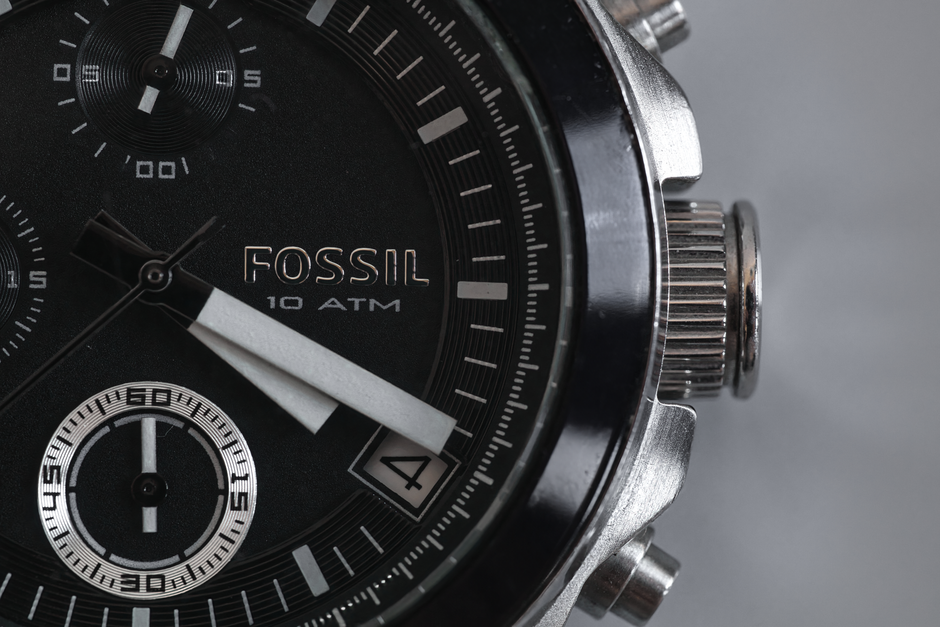
Both brands produce fashion watches, not tool watches. That means the design comes first, accuracy and durability second. Neither brand manufactures its own movements. Fossil owns the Fossil, Skagen, and Michele brands and operates its own assembly facilities in Asia. MVMT, founded in 2013 and acquired by Movado Group in 2018, outsources assembly to contract manufacturers.
The core problem both solve: giving you a stylish wrist accessory without spending Swiss watch money. But the solution quality differs significantly.
Movement type
Fossil uses Japanese quartz movements from Miyota or Citizen in nearly all its analog watches. MVMT uses Chinese-sourced quartz movements (often Seiko Instruments Inc. or generic equivalents). The practical difference? Fossil movements typically hold accuracy within +-20 seconds per month. MVMT movements drift +-30 to 45 seconds per month in real-world testing by watch forums.
Neither movement is serviceable economically. When the battery dies after 2-3 years, you replace the whole watch or pay $20-40 for a new movement. That is standard for this price bracket.
Case and crystal
Fossil uses stainless steel cases on all mainline models (e.g., the Fossil Grant FS4812). MVMT uses stainless steel on some models but also uses zinc alloy or brass on lower-priced lines like the MVMT 40. The crystal on Fossil watches is mineral crystal with a scratch-resistant coating. MVMT uses mineral crystal without coating on watches under $150.
Scratches appear faster on uncoated mineral crystal. A watch worn daily will show micro-scratches within 6 months on an MVMT. Fossil’s coating delays that to about 12-18 months.
Build quality comparison table
| Specification | Fossil (e.g., Grant FS4812) | MVMT (e.g., 40 Series) |
|---|---|---|
| Movement | Japanese quartz (Miyota) | Chinese quartz (SII or generic) |
| Case material | Stainless steel | Stainless steel or zinc alloy |
| Crystal | Mineral with coating | Mineral, uncoated |
| Water resistance | 50m (splash proof) | 30m (splash resistant) |
| Warranty | 11 years (with registration) | 2 years |
| Average price | $125–$175 | $95–$145 |
| Strap options | Leather, silicone, mesh, metal | Leather, silicone, metal |
The warranty difference alone changes the value equation. Fossil offers an 11-year warranty when you register the watch within 90 days. MVMT gives 2 years. If you plan to keep the watch longer than 24 months, Fossil’s warranty covers movement failure, crystal defects, and strap breakage. MVMT’s warranty expires before most batteries do.
Style: who wears what?
Both brands sell minimalist dials with thin cases. The difference is in the details.
Fossil offers more variety. The Fossil Neutra has a 44mm case with a sub-dial for date. The Fossil Jacqueline line targets smaller wrists with 36mm cases. Fossil also produces chronographs, skeleton dials, and smart hybrid watches (Fossil Gen 6). You can find a Fossil for almost any outfit category: business casual, weekend, or formal.
MVMT sticks to one look: clean dial, no date window, thin case (usually 40mm or 42mm), and a single crown. The design language is consistent across all models. If you want a watch that disappears under a cuff and says nothing, MVMT delivers. If you want a watch that adds a conversation starter or a specific detail, Fossil wins.
A common buyer mistake: buying MVMT because you like the Instagram aesthetic without checking case thickness. The MVMT 40 is 6mm thick — thin enough to slide under a dress shirt. The Fossil Grant is 11mm thick. That extra 5mm matters if you wear slim-fit shirts.
When not to buy Fossil

Fossil watches are heavy. A stainless steel Fossil Grant on a metal bracelet weighs about 150 grams. That is fine for someone used to wearing a watch. For someone moving from a fitness tracker or a lightweight Casio, that weight feels noticeable all day.
Fossil’s resale value is low. A $150 Fossil watch sells used for $30-50 on eBay. MVMT resale is even worse — $20-30. Neither brand holds value. If you care about resale, buy a Seiko or a Hamilton.
Fossil’s smartwatch line (Gen 6) runs Wear OS. Battery life is 24 hours with always-on display. That is standard for Wear OS but poor compared to Garmin or Apple Watch. Do not buy a Fossil smartwatch expecting multi-day battery life.
When not to buy MVMT
MVMT watches use standard spring bars and 20mm lug width, so strap swaps are easy. But the case back is stamped steel, not screw-down. That means battery changes require prying the back off, which can scratch the case. A local watch shop will charge $15-25 for a battery change on an MVMT. A Fossil battery change costs the same, but the case back is usually snap-off on lower models and screw-down on higher models — slightly less risk of damage.
MVMT’s customer service reputation is mixed. Online forums report delays of 2-4 weeks for warranty claims. Fossil has physical repair centers in Texas and Switzerland. If the watch breaks, Fossil can fix it faster.
One more thing: MVMT uses mineral crystal without anti-reflective coating. In bright sunlight, the glare makes reading the time difficult. Fossil applies a single-layer AR coating on most models. It is not sapphire-level clarity, but it helps.
Verdict: which one should you buy?
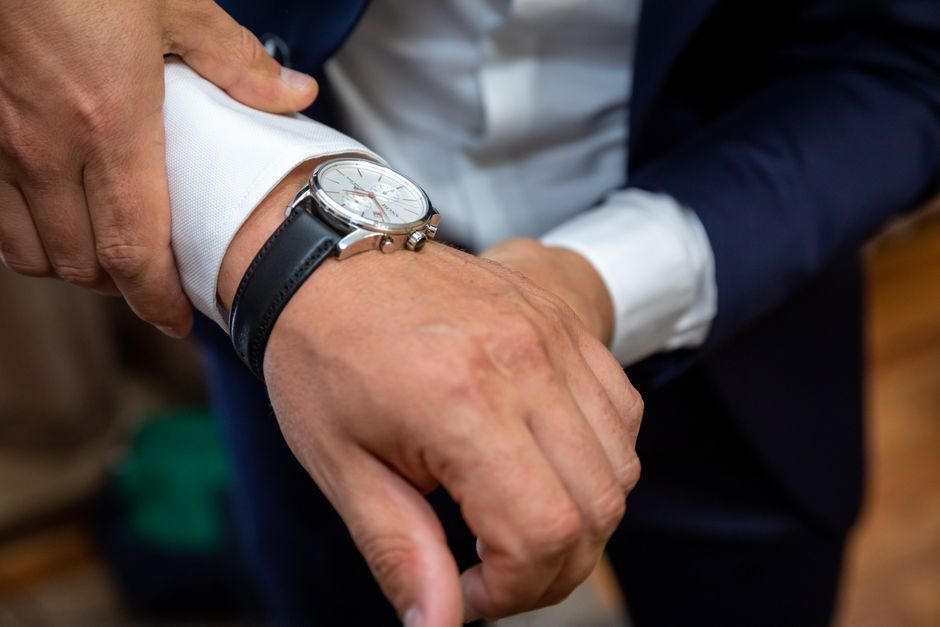
Buy Fossil if: you want a watch that lasts longer than 3 years, you prefer multiple strap options, you want a warranty that actually covers defects, or you need a specific style (chronograph, skeleton, hybrid smartwatch). The Fossil Grant FS4812 at $150 is the best value in this comparison because of the 11-year warranty and Miyota movement.
Buy MVMT if: you want the absolute thinnest case for under $100, you only wear one style (minimalist no-date), you plan to replace the watch every 2 years anyway, or you want a gift watch that looks more expensive than it is. The MVMT 40 at $95 is the pick for that use case.
Do not buy either if: you need water resistance beyond 50m, you want a mechanical (automatic) movement, or you expect the watch to hold resale value. In those cases, look at Seiko 5 Sports ($200-300, automatic, 100m water resistance) or Orient Bambino ($150, automatic, sapphire crystal on some models).