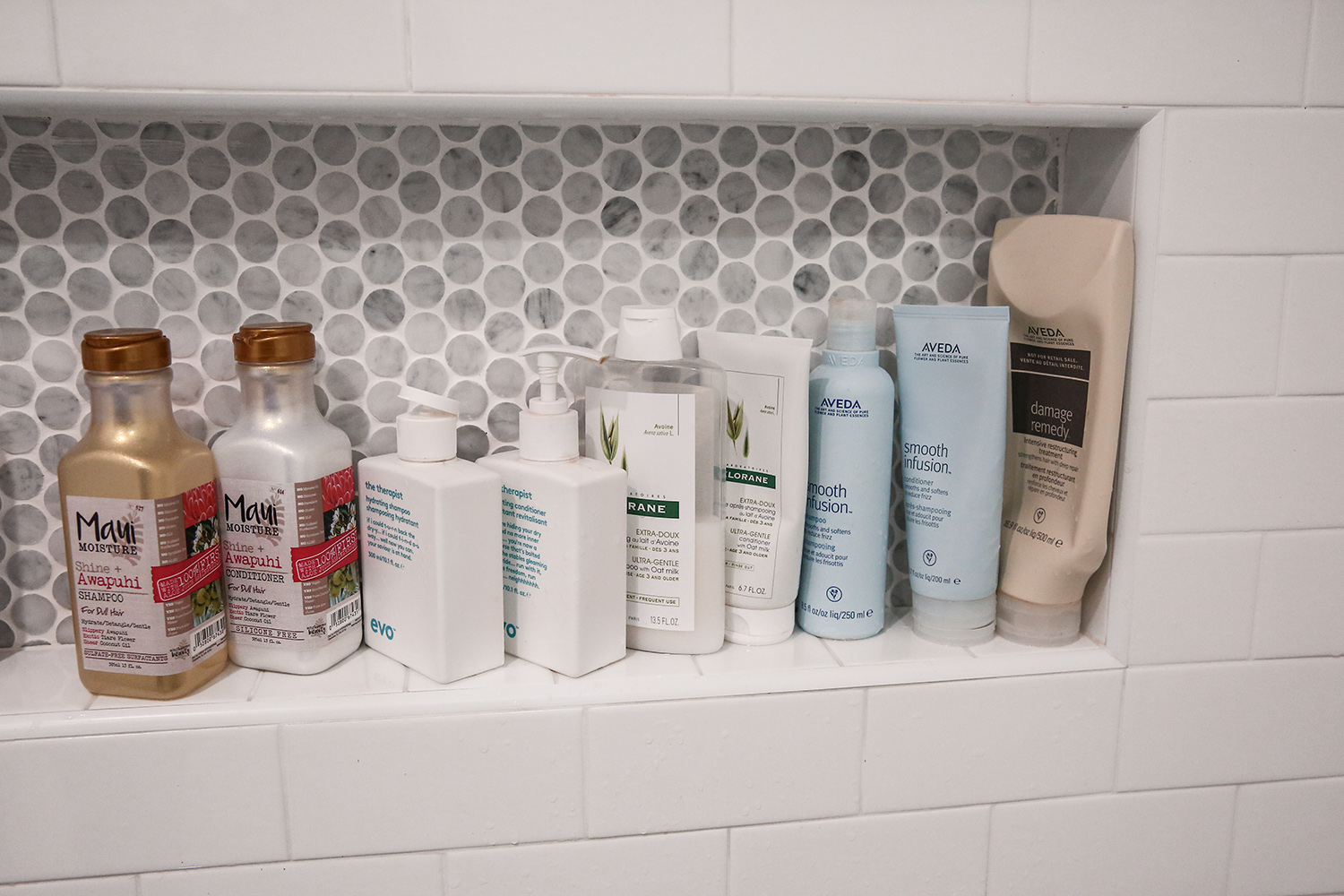
More products do not equal better hair. That’s the myth most people are running on, and it’s exactly why so many routines fail. Frizzy, brittle, flat, or damaged hair is rarely caused by a missing serum. Usually it’s caused by using the wrong ones — in the wrong order — stacked on top of too many others.
Strip it back. The best haircare routines are boring and consistent. Six products, maximum. Most people are running twelve.
Why Overcrowded Routines Are Quietly Wrecking Your Hair
Product overload isn’t just expensive — it actively works against your hair. Silicones from one product block moisture absorption from the next. Heavy creams trap lighter formulas before they can penetrate. Layering too many products creates buildup that makes hair look dull, feel weighed down, and respond poorly to everything you put on it.
Here’s what overcrowding looks like in practice:
- Three or more leave-in products layered at once — leave-in conditioner, then a cream, then a milk, then a serum. Pick two. The rest cancel out.
- Masking every single wash day. Masks are corrective tools for damaged or dry hair. If your hair is healthy, weekly deep treatments are excessive and often tip moisture balance in the wrong direction.
- Stacking mousse, curl cream, AND gel every wash day. Two styling products maximum. Beyond that you’re building a product cast that breaks down by noon.
- Swapping products every two to three weeks. You need 6–8 weeks minimum to evaluate anything. Most people quit at week two. That’s not the product failing — that’s impatience.
- Never clarifying. Every leave-in, oil, and styling product accumulates on the hair shaft. Without a monthly clarifying wash, you’re trying to hydrate hair through a layer of product residue. Nothing penetrates properly.
The Only Products You Actually Need
A functional haircare routine fits in six slots:
- Shampoo — matched to scalp type, not hair type
- Conditioner — mid-shaft to ends, always
- Deep treatment — weekly or biweekly, not daily
- Heat protectant — non-negotiable if you use hot tools
- Leave-in or lightweight serum
- Finishing oil or cream — optional, based on actual need
That’s it. Everything else is marketing.
What Silicone Buildup Actually Does Over Time
Silicone-heavy products — common in smoothing serums and many budget conditioners — coat the hair shaft and create a temporary shine. That’s the upside. The problem is accumulation. Each wash adds another coat. Without regular clarifying, this buildup blocks moisture from reaching the cortex of the hair, which is where hydration actually matters. Hair starts looking shiny but feeling dry and stiff underneath. That’s not a hydration problem. That’s silicone accumulation. The fix is a clarifying shampoo once a month — not a new serum.
The Correct Order to Apply Haircare Products — And Why Sequence Changes Everything
Order isn’t optional. Apply products in the wrong sequence and you’re wasting every dollar spent on them. Get this right and even a simpler, cheaper routine performs better than a twelve-step one done wrong.
In the Shower: Wash the Scalp, Not the Lengths
Shampoo starts at the scalp. Work it in with your fingertips — a scalp massager for two minutes improves circulation and costs about $10 — then let the lather rinse through the ends. Don’t scrub the lengths. The scalp produces sebum; that’s where the actual cleaning needs to happen. Aggressively working shampoo through your ends strips moisture from the part of the hair that can’t replenish it on its own.
Rinse shampoo completely before conditioner goes on. Residual shampoo dilutes conditioner and causes scalp buildup fast. Rinse until the water runs clear.
Conditioner goes on from mid-shaft to ends. Roots don’t need it — most scalps produce enough natural oil to handle that zone. Conditioner at the roots means flat, greasy hair within a few hours. Detangle with fingers or a wide-tooth comb while the conditioner is in — not after, when hair is dryer and more prone to snapping. Rinse with cool water to close the cuticle.
For color-treated or bleached hair, shampoo formula matters more than most people realize. The Redken Extreme Bleach Recovery Shampoo ($20) is specifically formulated to restore lipids lost during the bleaching process. It’s not a luxury add-on — for chemically processed hair, it’s a functional tool that outperforms generic moisturizing shampoos.
After the Shower: The Damp-Hair Window
Switch your towel first. Standard terry cloth creates friction against the cuticle that causes frizz before you’ve touched a single styling product. The Aquis Microfiber Hair Towel ($30) cuts dry time noticeably and reduces cuticle damage — it’s one of the highest-return swaps in a haircare routine and one of the least talked about. Most people overlook it entirely.
Apply leave-in conditioner to damp hair. Not dripping wet, not dry. Damp is the window where the cuticle is open enough to absorb product but won’t dilute it. On completely wet hair, the product washes right off during towel drying. On dry hair, the cuticle has already closed and absorption is minimal.
After leave-in: heat protectant. After heat protectant: styling products. Oil comes last. Oil is a sealant — it locks moisture and product underneath it into the hair shaft. Apply oil first and you’ve created a barrier that prevents everything else from reaching the hair. This one sequencing mistake explains why so many people say “nothing absorbs” or “nothing works” in their hair, even after spending real money on products.
Weekly and Monthly Steps: What Not to Do Daily
Not everything is a daily step. Here’s the correct cadence:
- Every wash day: Shampoo, conditioner, leave-in, heat protectant if styling
- Weekly: Deep conditioning mask for 20–30 minutes on clean damp hair. The Briogeo Don’t Despair, Repair! Deep Conditioning Mask ($42 for 8oz) is fragrance-free, works on color-treated hair, and shows results within 3–4 uses — not months
- Monthly: Clarifying shampoo to strip buildup, followed by an extra-rich conditioning session to restore what the clarifier removed
That monthly clarify is not negotiable if you use styling products regularly. Skip it and your entire routine becomes an exercise in layering product on top of product, none of it reaching the actual hair.
The Mistakes That Are Silently Damaging Your Hair
Most hair damage is slow and accumulated — you don’t see it until months of wrong habits have stacked up. These are the ones that show up most consistently, and the ones nobody tells you about until it’s too late.
Heat Without Protectant — No Exceptions
A flat iron at 400°F on unprotected hair literally cracks the cuticle. Done consistently over weeks and months, that’s chronic breakage, dullness, and split ends that travel up the shaft. A heat protectant is not optional equipment.
The Verb Ghost Oil ($22) doubles as both a finishing serum and a heat protectant up to 450°F, which means it replaces two products and adds essentially no weight — good for fine hair specifically. For thicker or coarser hair that needs more smoothing power, the Moroccanoil Treatment Original ($46 for 3.4oz) remains the standard. The knockoffs don’t perform the same. Only the original formula.
Washing Too Often — or Leaning Too Hard on Dry Shampoo
Daily shampooing strips natural scalp oils. Your scalp responds by producing more oil faster — which is exactly how you end up with hair that goes greasy by day two even though you wash every day. Breaking that cycle means stretching washes gradually: every other day, then every two days. The scalp recalibrates within two to three weeks.
On the other side: dry shampoo is a bridge, not a substitute. Batiste ($8) works fine for one to two days between washes. Using it across five or six days causes scalp buildup that can block follicles and contribute to shedding over time. Know where the line is.
Ignoring the Scalp Completely
Healthy hair grows from a healthy scalp. Persistent shedding, flaking, and slow growth usually trace back to scalp health — not a missing supplement or wrong shampoo brand. A scalp massager used for two minutes during shampooing increases blood flow to the follicles. Published research shows consistent scalp massage over 24 weeks measurably improves hair thickness. It costs $10 and takes two minutes. Most people skip it and buy another serum for their ends instead.
Products Worth Your Money vs. Where You’re Wasting It
No hedging here. This is what’s actually worth buying and what to cut.
The Full Breakdown
| Product | Price | What It Does | Verdict |
|---|---|---|---|
| Olaplex No.3 Hair Perfector | $28 | Reconnects broken disulfide bonds in bleached or heat-damaged hair | Worth it — for chemically processed hair specifically |
| Briogeo Don’t Despair, Repair! Mask | $42 / 8oz | Deep conditioning, fragrance-free, effective on color-treated hair | Worth it — one of the better weekly masks available |
| Moroccanoil Treatment Original | $46 / 3.4oz | Argan oil serum for smoothing, shine, and heat protection | Worth it — skip all dupes, original only |
| Verb Ghost Oil | $22 | Lightweight oil and heat protection to 450°F, replaces two products | Worth it — especially for fine or medium hair |
| Aquis Microfiber Hair Towel | $30 | Reduces friction and cuticle damage during drying | Worth it — underrated, high return on investment |
| Garnier Fructis Hair Filler | $9–12 | Bond repair system at drugstore price, addresses porosity damage | Worth it — outperforms its price point significantly |
| Biotin or collagen hair supplements | $20–60/month | Hair growth support — effective only when deficiency is the actual cause | Skip unless bloodwork confirms a deficiency |
| High-end scalp serums (most brands) | $50–120 | Varies widely; most lack clinical evidence for general hair concerns | Skip unless addressing a diagnosed scalp condition |
The Best Drugstore Options When Budget Matters
You don’t need to spend $40+ across every product category. The Garnier Fructis Hair Filler ($9–12) punches well above its price — a bond repair system that addresses the porosity damage most heat and color-treated hair has. For everyday conditioning, the Kristin Ess The One Signature Conditioner ($12) is clean, silicone buildup is minimal, and it’s genuinely effective for a drugstore formula. Neither requires a prestige price tag to deliver real results.
How to Know If Your Routine Is Actually Working
The most common haircare mistake isn’t the products — it’s the evaluation. People judge routines in two weeks and abandon them in three. Here’s how to assess what’s actually working.
How Long Before You Should See Results?
Surface changes — softness, reduced frizz, improved shine — are visible within 2–3 washes. Structural changes — less breakage, better elasticity, improved density — take 6–8 weeks minimum. Hair grows roughly half an inch per month. Structural repair tracks a similar pace. If you’ve used something correctly for fewer than six weeks, you haven’t given it a fair trial. Stop switching.
What Does Actually Healthy Hair Feel Like?
Healthy hair has elasticity. Wet, it stretches slightly under tension and snaps back without breaking. Dry, it doesn’t feel like straw. When detangling, it releases without major resistance or snapping.
If wet hair stretches and doesn’t bounce back — that’s over-moisturized or protein-deficient hair. If dry hair snaps instantly under light tension — that’s dehydrated or over-processed hair. Neither is fixed by adding more products. Both require adjusting the protein-to-moisture ratio in your shampoo and conditioner. More protein for the first issue, more moisture for the second. Get the foundation right before adding anything on top.
When Should You Actually Switch Your Routine?
Seasons change hair behavior. High summer humidity vs. dry winter air mean your hair’s needs shift throughout the year — lighter, water-based products in humid months, richer oil-based ones in dry months. This is a valid reason to adjust. “I’m bored with this product” is not.
Major chemical changes — bleach, relaxer, keratin treatment — mean you are literally working with different hair afterward. What worked before the service often won’t work after. Treat it as a reset, not a continuation.
If after a genuine 8-week trial with consistent use you’re seeing zero improvement — persistent shedding, no texture change, ongoing scalp issues — stop buying products and book a trichologist appointment instead. That’s not a haircare routine problem.
Quick Verdict by Hair Type:
- Bleached or chemically processed hair: Olaplex No.3 weekly + Briogeo mask biweekly + Redken Extreme Bleach Recovery Shampoo. That combination covers 80% of the repair work.
- Fine hair prone to going flat or greasy: Lightweight shampoo + conditioner on ends only + Verb Ghost Oil as finisher. Skip heavy masks and creams entirely.
- Thick, dry, or coarse hair: Moisture-rich conditioner + Briogeo mask weekly + Moroccanoil Treatment Original to seal. Clarify monthly without exception.
- Healthy hair, maintenance only: Clean shampoo matched to your scalp + a simple conditioner + one finishing product. Don’t add complexity that doesn’t solve a real problem.