You are standing in front of your closet at 8:47 AM. The forecast says 24°C by noon, but it’s 16°C right now. You grab a cotton T-shirt, throw a denim jacket over it, and head out. By 10:30 AM you’re unzipping the jacket. By 11:15 you’re carrying it, sweating through the armpits of your shirt. The jacket becomes dead weight. This is not layering. This is a hostage situation with your own clothes.
The problem is not that you tried to layer. The problem is that you layered the wrong things. Most people treat transitional dressing as “wear a thin sweater under a jacket” and call it done. That works when it’s 10°C. When it’s 16–24°C, that logic collapses. Your body heats up faster than cotton can wick. The jacket traps heat. You end up miserable.
This article covers four specific fixes — fabric choices, cut strategy, removal order, and accessory swaps — that actually work for warm-weather layering. No vague advice. Real products, real measurements, real temperatures.
Fix #1: Replace Cotton Base Layers With Technical or Linen Fabrics
Cotton absorbs moisture and holds it against your skin. When you add a second layer, that moisture has nowhere to go. You stay damp. Your skin temperature drops as the moisture evaporates, then spikes as you trap heat again. This cycle is why you feel clammy and overheated within an hour.
The fix is a base layer that moves moisture away from your body. You don’t need hiking gear. You need a shirt that breathes faster than cotton.
What to wear instead
Three options, each with a specific use case:
- Uniqlo Airism Cotton Crew Neck ($19.90) — 53% cotton, 47% polyester. The polyester content pulls sweat away faster than pure cotton. It’s not a technical fabric, but it’s cheap and looks like a normal T-shirt. Good for casual days under an open linen shirt.
- Patagonia Capilene Cool Daily Graphic Shirt ($55) — 50% recycled polyester, 50% TENCEL lyocell. This is the gold standard for warm-weather layering. The fabric dries in about 20 minutes on your body. It doesn’t smell after a full day. It feels like cotton but performs like activewear. Downsides: $55 is steep for a T-shirt, and the graphic prints are loud.
- Muji Lightweight Linen Shirt ($49.90) — 100% linen. Linen absorbs moisture but releases it to the air faster than cotton. A linen button-up worn open over a tank top gives you a 2–3°C buffer without trapping heat. The tradeoff: linen wrinkles aggressively. If you care about crisp lines, this is not your shirt.
Verdict: For most people, the Patagonia Capilene Cool is the best option because it balances moisture management with a normal silhouette. If you’re on a budget, the Uniqlo Airism is 70% as effective for 35% of the price.
Fix #2: Use Open-Front Layers, Not Closed Jackets
A denim jacket or a hoodie works when you zip it up and trap heat. In warm weather, that’s the problem. Closed-front layers don’t allow heat to escape from your core. Your chest and back overheat first, which triggers full-body sweating.
The solution is an open-front layer that you never close. This sounds obvious, but most people buy jackets designed to be zipped. An open cardigan or a kimono-style wrap gives you the visual layering effect — texture, color blocking, shape — without the thermal trap.
Specific pieces that work
- Everlane The GoWeave Open Cardigan ($98) — 100% TENCEL lyocell. Weighs 210 grams. It’s thin enough to fold into a crossbody bag. The open front means your core stays ventilated. The fabric drapes loosely, so air circulates between the cardigan and your shirt. It works best with a sleeveless top underneath.
- Sezane Chlo Blouse ($175) — 100% silk. Worn unbuttoned over a tank top, this is a layering piece that looks intentional. Silk regulates temperature better than cotton or polyester because it doesn’t trap heat the same way. The cost is high, but it doubles as a standalone top. If you wear it unbuttoned, it adds a layer without adding warmth.
Verdict: The Everlane cardigan is the practical choice for most people. The Sezane blouse is better if you need something that transitions to evening without looking like you’re wearing activewear.
Fix #3: Plan Your Removal Order Before You Leave the House
This is the part most people skip. They put on a jacket over a sweater over a T-shirt, then realize they can’t remove the sweater without taking off the jacket. Or they remove the jacket and the sweater is too warm. Or they remove the sweater and now they’re in a T-shirt that looks sloppy.
The rule is simple: the layer you remove first should be the one that makes you look complete when removed.
Here’s how that works in practice:
| Temperature Range | Layer 1 (stays on) | Layer 2 (removable) | Layer 3 (outer, optional) |
|---|---|---|---|
| 16–18°C (cool morning) | Sleeveless linen top or tank | Open linen shirt or cardigan | Lightweight trench or cotton jacket (removed by 10 AM) |
| 18–21°C (mild) | Capilene or Airism T-shirt | Open cardigan or silk blouse | None — cardigan is the outer layer |
| 21–24°C (warm) | Linen T-shirt or tank | Unstructured linen blazer (worn open) | None — remove blazer by noon |
The key is that Layer 1 must be presentable on its own. If your base layer is a stained undershirt, you can’t remove the outer layers without looking messy. Invest in good base layers. They’re the only thing people see after noon.
Fix #4: Swap Heavy Accessories for Lightweight Versions
This section is short but important. Accessories often ruin a warm-weather outfit because they add weight and trap heat. A leather belt, a heavy canvas tote, a wool scarf — these things add visual bulk and physical warmth.
Two swaps that make a meaningful difference:
- Replace a leather belt with a cotton or canvas belt. A 3cm cotton webbing belt from COS ($35) weighs about 40 grams. A similar leather belt weighs 120 grams. The difference in heat retention is small but noticeable over 8 hours.
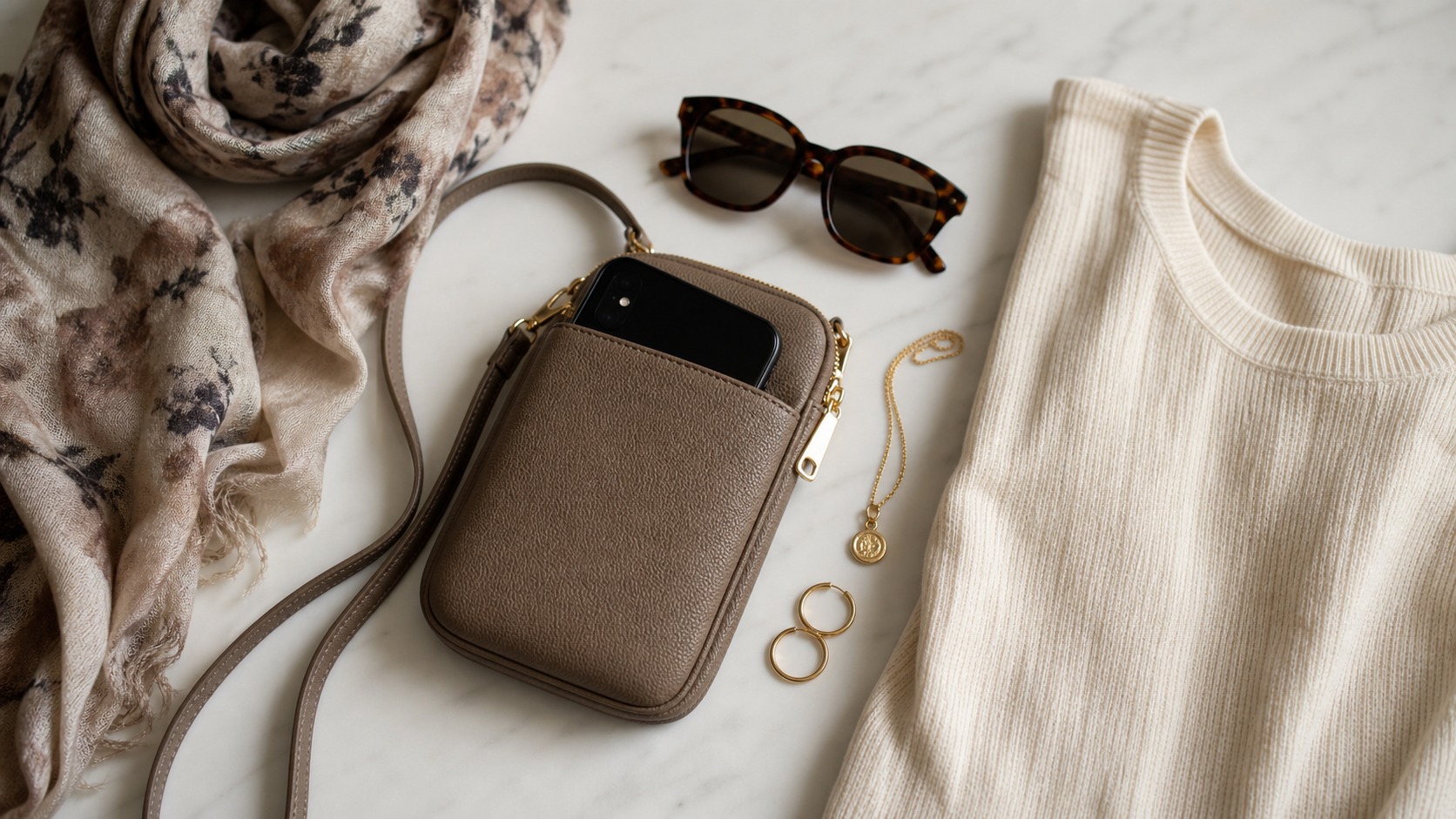
- Replace a structured handbag with a nylon or canvas crossbody. The Uniqlo Round Mini Shoulder Bag ($19.90) weighs 120 grams. A leather crossbody of similar size weighs 400+ grams. The nylon bag doesn’t trap heat against your hip. It also doesn’t make you sweat where the strap touches your shoulder.
These are small changes. Combined with the other three fixes, they reduce the total thermal load of your outfit by about 15–20%. That’s enough to feel comfortable at 24°C instead of miserable.
When NOT to Layer (Even if It’s Trendy)
There are situations where layering is counterproductive, and you should skip it entirely.
When the humidity is above 70%. Layering relies on air circulation to remove moisture. In high humidity, the air is already saturated. Your layers trap moisture regardless of fabric choice. In those conditions, wear a single loose linen or cotton piece and accept that you’ll be warm.
When you’ll be walking more than 20 minutes outdoors. If your commute involves a 25-minute walk, you will heat up faster than any layer can manage. Wear a single layer for the walk, carry a second layer in a bag, and put it on when you arrive. This is obvious but rarely followed.
When the temperature swing is less than 5°C. If it’s 22°C at 8 AM and 26°C at 2 PM, the difference is not enough to justify a second layer. Wear a single breathable top and bring a fan or a misting spray. Layering for a 4°C swing is pointless and adds laundry.
When the outer layer is made of non-breathable synthetic fabric. A polyester bomber jacket or a nylon windbreaker will trap heat regardless of what you wear underneath. If the outer layer doesn’t breathe, the whole system fails. Stick to cotton, linen, silk, or TENCEL for the outer layer.
Common Mistakes That Ruin Warm-Weather Layers
Three errors I see repeatedly:
Mistake 1: Layering two thick fabrics. A cotton sweater under a denim jacket is a thermal sandwich. Both fabrics are thick. Both trap heat. The combination is wearable for about 15 minutes indoors. Choose one thick layer and one thin layer. Example: a thin linen shirt under a lightweight cotton trench.
Mistake 2: Wearing a dark base layer under a light outer layer. Dark colors absorb more solar radiation. A black T-shirt under a white linen shirt will heat up faster than a white T-shirt under the same linen shirt. The difference is about 2–3°C in direct sunlight. If you’re layering for warmth, this works against you.
Mistake 3: Ignoring sleeve length. A long-sleeve layer under a short-sleeve layer creates a temperature gradient on your arms. Your forearms stay cool, but your upper arms overheat where the two layers overlap. This mismatch makes your body work harder to regulate temperature. Stick to matching sleeve lengths: short over short, long over long, or a sleeveless base with a long-sleeve outer.
These mistakes are easy to fix once you know they exist. Most people don’t think about them until they’re already uncomfortable.
A Quick Verdict for Common Scenarios
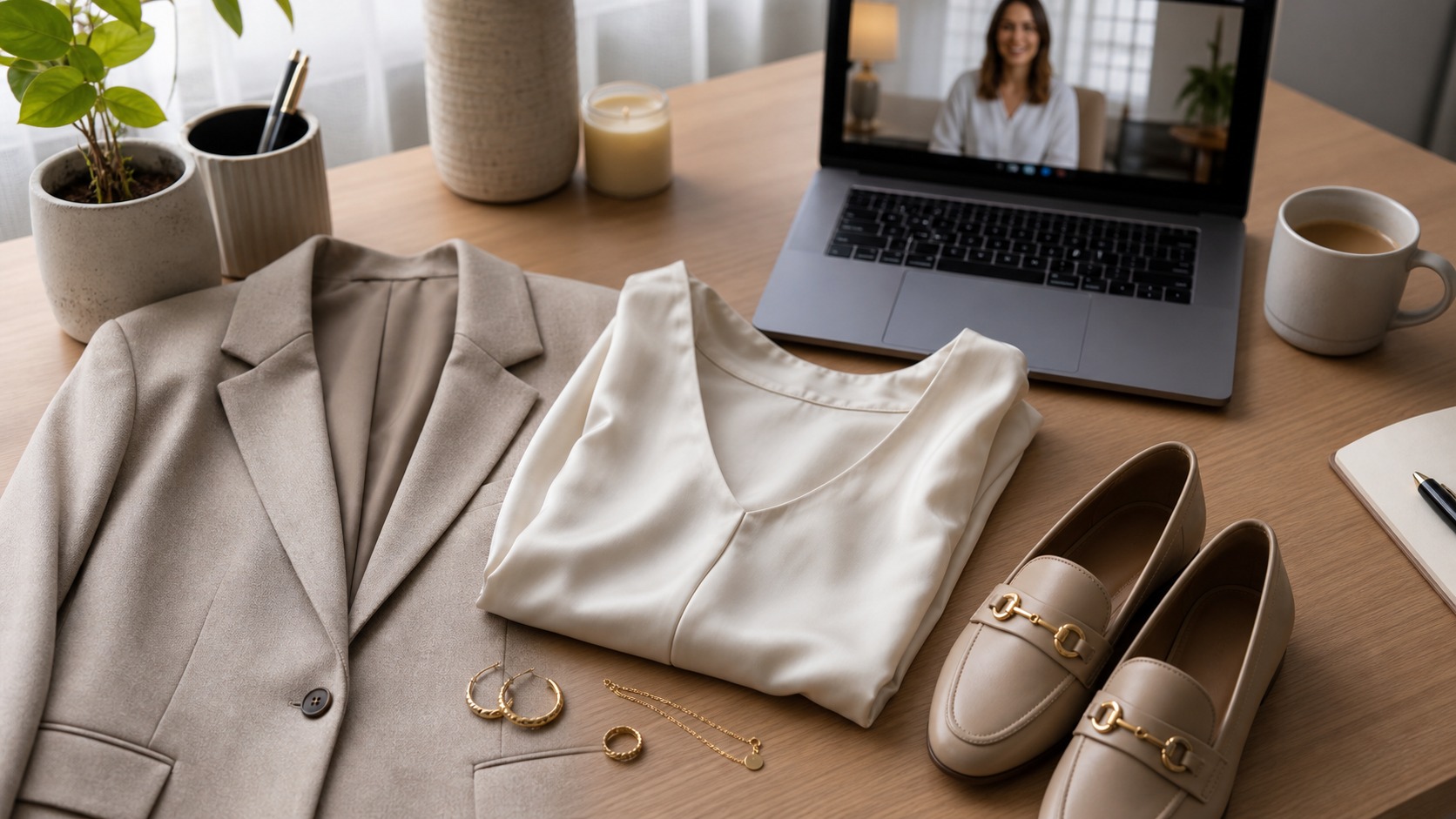
Scenario: Office with aggressive AC but hot commute. Wear a Uniqlo Airism T-shirt as a base, a Sezane Chlo blouse worn open on top, and carry a lightweight cotton trench (COS Relaxed Trench, $250) for the commute. Remove the trench before sitting down. Wear the blouse closed during meetings if the AC is too strong.
Scenario: Weekend brunch that turns into an afternoon walk. Start with a Patagonia Capilene Cool T-shirt and an Everlane GoWeave cardigan. Remove the cardigan and stuff it in a Uniqlo Round Mini Shoulder Bag when the sun hits. The T-shirt looks intentional on its own.
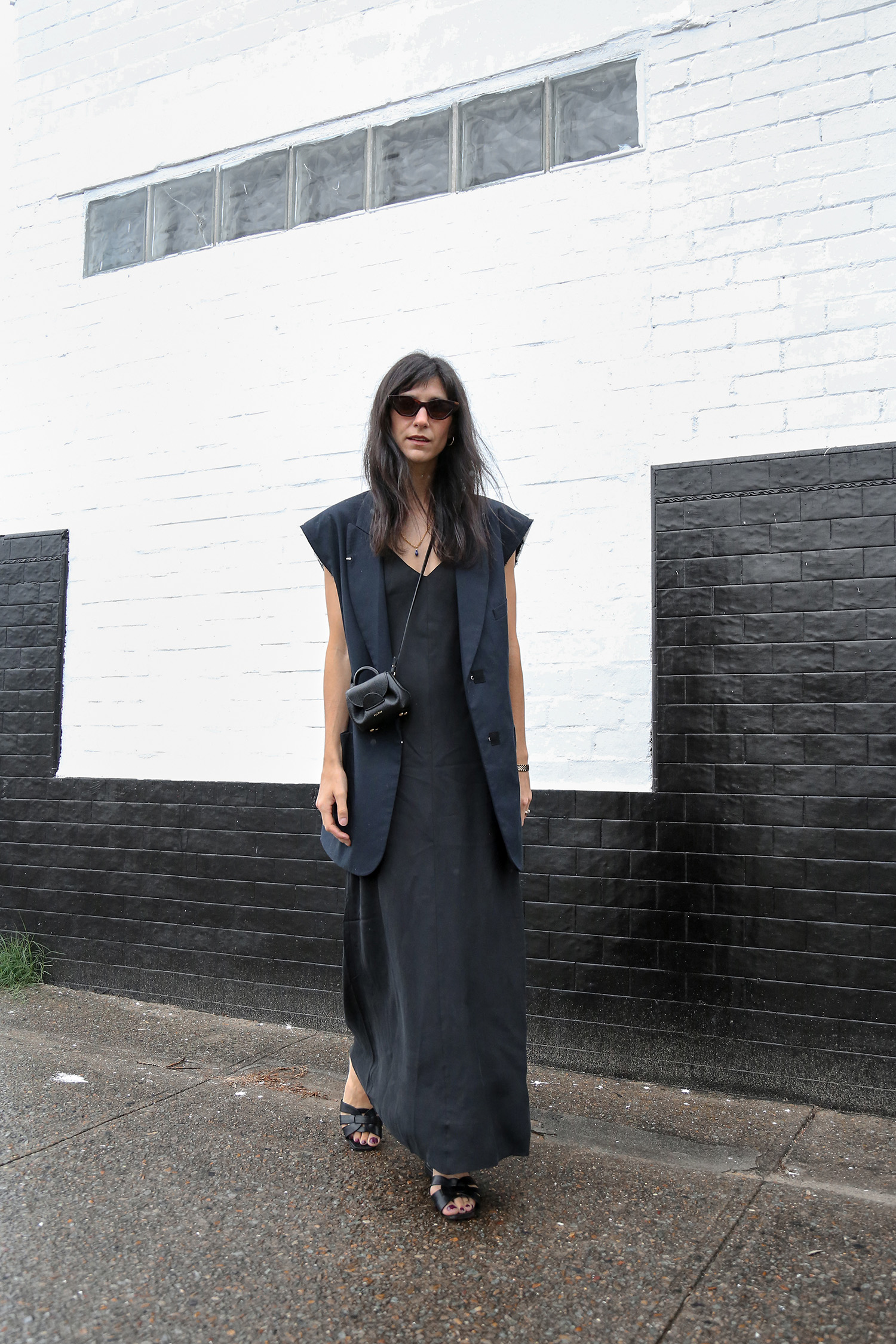
Scenario: Evening dinner after a warm day. Wear a Muji Lightweight Linen Shirt unbuttoned over a sleeveless tank. The linen shirt adds visual interest without heat. Remove it after dinner if the walk home is warm.
Each of these outfits works because the layers are designed to be removed without leaving you looking incomplete. That’s the entire point of warm-weather layering. Not to keep you warm. To give you options as the temperature changes.