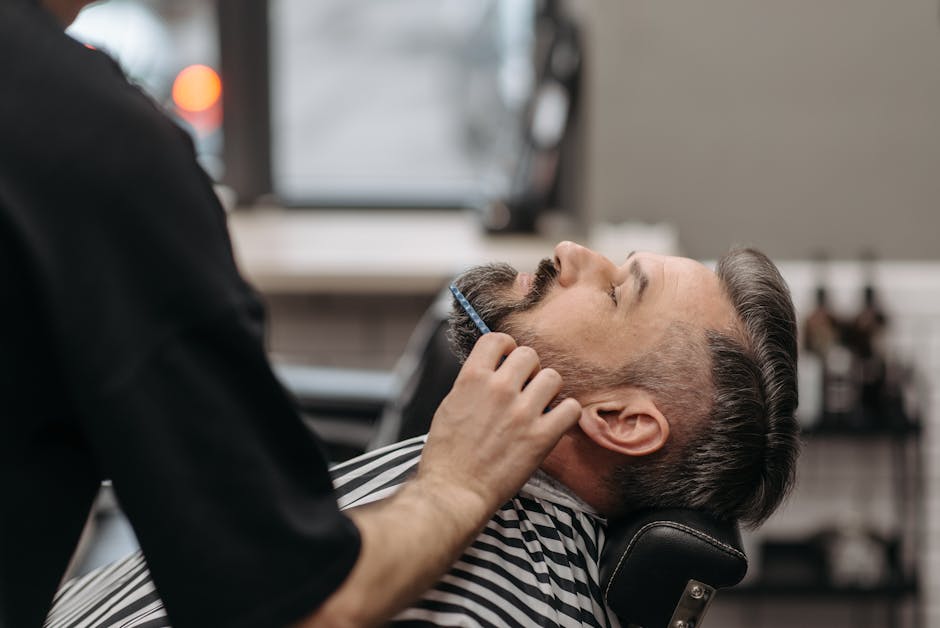
Beard Straightener vs. Brush Comb: What Actually Tames a Messy Beard
Is your beard wiry, patchy-looking, or refusing to lie flat no matter what you put in it? Beard oil helps with softness. Balm adds light hold. But neither one changes the actual shape of the hair.
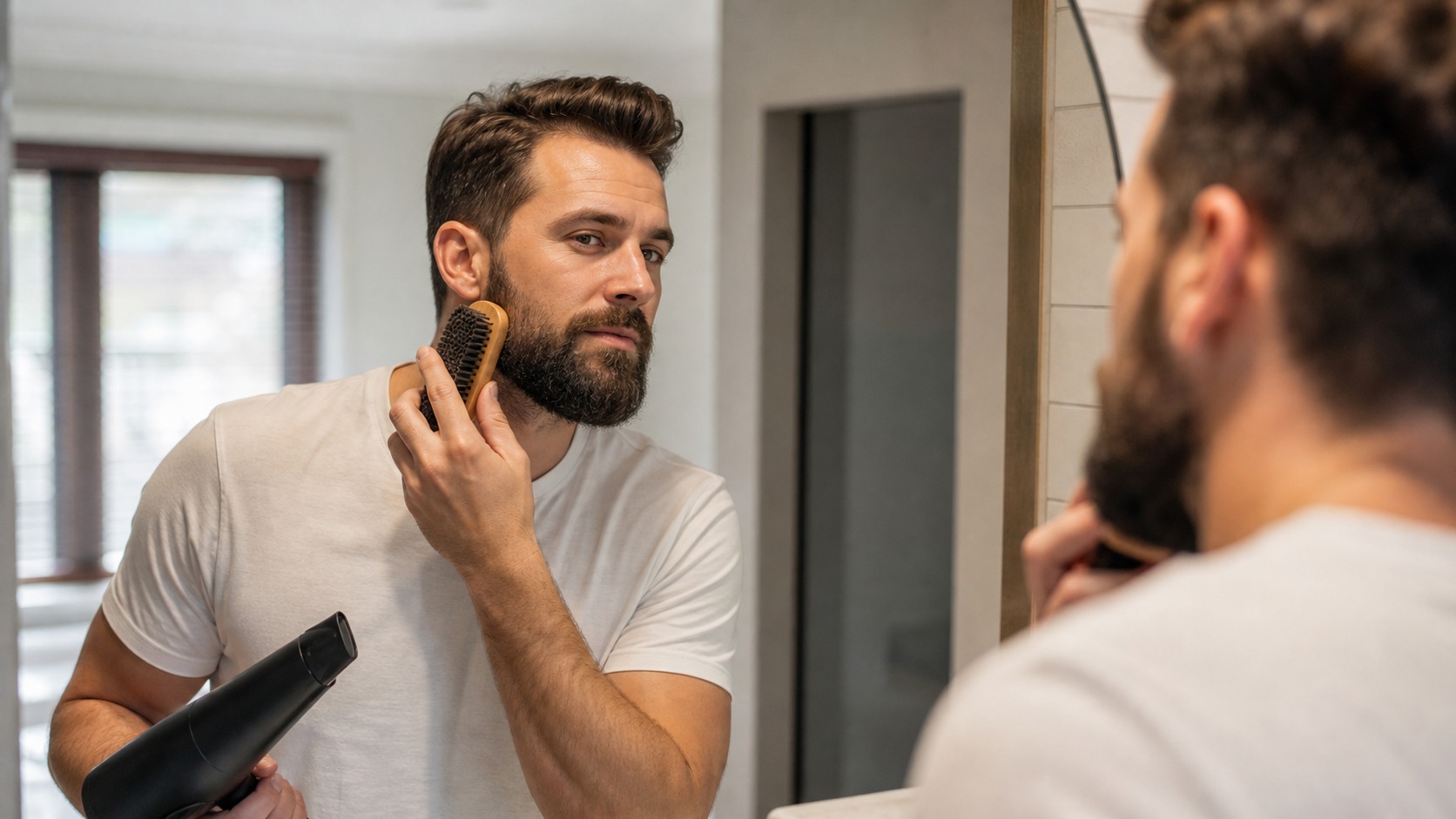
That is what a heated beard brush does. It uses controlled heat to relax the hair cuticle as you brush, physically reshaping the strand so it lies smooth. The result holds for hours — not until your next shower, not until the wind hits it.
The category has matured fast. Under-$20 options now carry serious review counts. The heated beard brush kit priced at $17.09 has 13,756 reviews at 4.5 stars — that volume does not happen by accident. This breakdown covers exactly how these tools work, what specs matter, when a heated brush beats everything else, and when it does not.
How Heated Beard Brushes Work — And Why They Are Not Just a Flat Iron for Your Face
Most men assume heated beard brushes are a gimmick dressed up in new packaging. The mechanism is actually distinct from both flat irons and regular combs — and understanding it tells you exactly why results vary so much between users who do it right and users who do not.
The Science Behind Heat-Straightening Beard Hair
Hair is made of keratin protein chains wrapped in a cuticle layer. When you apply heat in the 130–200°C range, the hydrogen bonds holding those protein chains in shape temporarily relax. While the hair is warm and pliable, you can reshape it. As it cools, those bonds re-form in the new position — straight instead of curled or kinked.
The key word is controlled. Too little heat and the bonds never fully relax. Too much and you denature the protein permanently, causing visible frizz and breakage that compounds with every use. Most men who say heated brushes damaged their beard were using too much heat on unprotected, sometimes damp hair.
Beard hair is structurally different from scalp hair. It has a more oval cross-section, which is why it curls. It has a thicker cuticle and tends to be coarser in diameter. It also grows in shorter cycles than scalp hair, making it more brittle when dry. All of this means beard hair responds well to heat — but it needs conditioning oil beforehand to avoid drying out the cuticle during the process.
What Anti-Scald and Dual Voltage Actually Mean on a Spec Sheet
Two features separate a well-designed heated brush from a cheap one: anti-scald construction and voltage range.
Anti-scald means the outer comb teeth or bristle housing stays significantly cooler than the internal heating plate. The ceramic or metal element heats up; the comb structure insulating your skin does not conduct that heat directly. Without this, you would burn your face on contact. It is not a premium feature — it is baseline safety. Any heated brush marketed for use near skin without anti-scald protection is not worth buying at any price.
Dual voltage (100–240V) means the brush runs on North American power (110V) and European power (220V) without a converter. Single-voltage brushes plugged into the wrong outlet can fry the heating element or, in older outlets, cause a spark. Most quality budget options now include dual voltage — but it should be confirmed, not assumed. The heated brush kit at $17.09 includes this feature, which makes it legitimately travel-usable without extra gear.
Auto shut-off — typically triggering after 30 to 60 minutes of inactivity — rounds out the must-have list. This is a fire prevention feature. Leaving a 200°C device on a shelf unattended is a real risk. Treat auto shut-off as non-negotiable.
Ceramic Plates vs. Ionic Bristles: Does It Actually Matter at This Price Point?
Higher-end heated brushes from brands like TYMO and BaByliss for Men use ceramic-coated plates that distribute heat more evenly and emit negative ions, which reduce static frizz during styling. At the $35–$60 price range, this difference is measurable.
At the $15–$20 price range? The gap narrows considerably. The main driver of results at this tier is not plate material — it is technique, beard prep, and whether you used oil beforehand. A ceramic brush used on a dry, unprotected beard will still produce worse results than a basic heated brush used on a conditioned, fully dry beard with proper slow strokes.
Short version: spend more for ceramics if you are styling daily and care about longevity. For occasional use or gifting, the under-$20 options with anti-scald and dual voltage cover what most men actually need.
Heated Brush vs. Flat Iron vs. Balm: A Side-by-Side Comparison
These tools are not interchangeable. They solve different problems at different price points and with different skill requirements. Here is how they stack up across the specs that matter.
| Tool | Temp Range | Time to Style | Hold Duration | Travel-Safe | Price Range | Best For |
|---|---|---|---|---|---|---|
| Heated beard brush | 130–200°C | 3–5 min | 4–8 hours | Yes (dual voltage) | $15–$40 | Short to medium beards, daily use |
| Mini flat iron | 150–230°C | 5–10 min | 6–12 hours | Sometimes | $20–$80 | Long beards needing section control |
| Beard balm alone | N/A | 1–2 min | 2–5 hours | Yes | $8–$25 | Mild frizz, light shaping |
| Beard oil alone | N/A | 1 min | Softens only | Yes | $10–$30 | Conditioning, shine, skin health |
| Full grooming kit | N/A | 5–10 min | Varies | Yes (bag included) | $15–$50 | Complete maintenance without heat |
The Conair Mini Straightener ($18) is the flat iron option most accessible to men new to beard styling — but flat irons require section-by-section work and carry a higher risk of scorching coarser hair if you move too fast. The TYMO heated beard brush and BaByliss for Men beard styler both sit in the $30–$45 range with better ceramic construction if you want a step up from budget options.
The verdict here is clear: for most men with a short to medium beard, a heated brush is the right tool. It is faster, safer on curved facial contours, and has a much lower learning curve than a flat iron. Flat irons earn their place only on longer beards — past chin length — where a brush cannot reach the full strand length in one pass.
The Single Biggest Mistake That Ruins Beard Straightening Results
Using a heated brush on a damp beard will damage it. Full stop. Water boils at 100°C. Heated brushes run at 130–200°C. Apply that to wet hair and the trapped water inside the shaft superheats, expands, and cracks the cuticle from the inside out. You get instant frizz, white flaking, and a beard that looks worse than before you touched it — and that damage is cumulative.
Always wait until the beard is bone dry. If you washed it, blow-dry on low heat or wait 15 minutes before picking up the brush. This one step fixes more than half of the bad results men report with heated beard tools.
Step-by-Step Technique: How to Actually Use a Heated Beard Brush
Buying the right tool is half the job. The other half is doing it in the right order. Most men skip the prep and wonder why results are mediocre.
Before You Heat: The Prep Sequence
- Wash with a dedicated beard wash — not regular shampoo. Shampoo is designed for scalp, strips beard oil aggressively, and leaves facial hair brittle. A proper beard wash (like the one included in the XIKEZAN Beard Kit at $16.99) cleans without stripping the natural sebum that keeps beard hair pliable.
- Pat dry with a towel. Not rub. Rubbing disrupts the cuticle layer and creates the frizz you are trying to fix.
- Wait until fully dry. Blow-dry on low if you are in a rush. Never skip this step.
- Apply 3–5 drops of beard oil or a pea-sized amount of beard conditioning balm — this is your heat protectant. Work it through from root to tip.
- Let the heated brush reach full temperature — about 60–90 seconds after switching on. Brushing before it is fully heated gives uneven results and wastes time.
The Brushing Technique That Gets Real Results
- Start at the neck and work upward in sections. Brush downward with the hair grain. Bottom-to-top sectioning ensures you hit every layer.
- Use slow, deliberate strokes — approximately 3 seconds per pass. Fast strokes do not transfer enough heat. Think of it as gliding, not combing.
- For coarser or curlier spots, pause the brush at the end of each stroke for 1–2 seconds. Hold the tension and let the heat set the shape before releasing.
- No more than 3 passes on the same section. If it is not straightening after three passes, the problem is moisture, too much product buildup, or a temperature too low for your hair type — not a need for more passes.
- Save the mustache area for last. Use the edge of the brush with shorter, lighter strokes near the lip line. The skin here is more sensitive, so keep the brush moving.
Locking the Style After Heat
- While the beard is still slightly warm — within the first 30 seconds after finishing — apply a small amount of beard wax or finishing balm. Heat opens the cuticle; product applied at this moment bonds more effectively than product applied cold.
- Shape with your fingers once. Then leave it alone. Repeated touching transfers oil from your hands and breaks the hold.
- For men using a heated beard brush kit that includes a dual-action comb, the finishing comb pass is the last step — one slow stroke from root to tip to smooth any remaining flyaways and align the hair direction.
Beard Straightener Questions — Answered Without Hedging
Will Daily Use of a Heated Brush Damage My Beard?
Used correctly, no. Used daily on high heat without oil, or on damp hair, yes — and the damage shows up fast. The rule is straightforward: medium heat (150–170°C for most men) with a light protective oil before every session is safe for daily use. High heat (180–200°C) should be reserved for thick or coarse beards, and only when lower settings are not producing results.
What consistently causes damage is the combination of max heat plus no oil plus rushing through damp hair. Any one of those mistakes alone is manageable. All three at once will visibly degrade beard texture within two to three weeks. Brands like Honest Amish and Beardbrand both make pre-heat beard oils with argan and jojoba specifically formulated for use before heat styling — worth knowing if you are a daily user.
What Temperature Works for Different Beard Types?
- Fine or thin beard: 130–150°C. Start at the lowest effective setting. Fine hair straightens easily and burns at lower thresholds than coarse hair.
- Medium thickness (most men): 150–170°C. This range handles the majority of beard types without risk.
- Coarse or thick beard: 170–200°C. Increase only after confirming lower temps are not working after a full pass.
- Gray beard: Gray hair loses melanin and structural protein density, making it simultaneously coarser in feel but more fragile. Start at 160°C and assess.
- Curly or Afro-textured beard: Full 200°C is often needed, but prep matters most here. Pre-heat oil is non-negotiable, and slow strokes are essential.
Should You Buy a Heated Brush If You Already Own a Beard Grooming Kit?
If your beard is healthy but just hard to shape — wavy, poofy, or patchy-looking from uneven curl patterns — a heated brush is the missing piece, not a redundant purchase. A grooming kit handles condition and maintenance. A heated brush changes the actual texture.
If your beard is dry, flaky, or brittle, start with the grooming kit first. Get the hair healthy. The XIKEZAN kit at $16.99 covers beard wash, oil, balm, comb, brush, scissors, and an ebook in one package — it is the better first investment if you are building a routine from scratch. Add heat tools after the beard baseline is solid.
Men who already have a working grooming routine and are specifically dealing with unruly texture will get immediate visible results from adding a heated brush. Think of them as two different tools solving two different problems — one for health, one for shape.
Back to that wind tunnel beard from the opening: the oil and balm were softening it and adding hold, but the shape was never changing. One pass with a heated brush on properly prepped, dry hair and the beard actually cooperates. That is the specific gap these tools fill — and why a $17 brush with 13,000 reviews earns its place in a daily grooming kit.