Most people assume awapuhi wild ginger is a marketing term — a tropical-sounding name slapped on a shampoo to justify a $22 price tag instead of $8. That assumption is wrong, and it explains why so many people get underwhelming results from otherwise well-formulated products.
Awapuhi wild ginger (Zingiber zerumbet) is a specific Hawaiian plant. The juice extracted from its flowering bulb has measurable, documented effects on hair fiber that generic moisturizing agents don’t replicate. But the ingredient only works when applied correctly — right products, right order, right technique.
This guide covers what awapuhi actually does at the structural level, how to build a routine around it, which Paul Mitchell products are worth the spend, and when this ingredient is simply the wrong tool. This is not a substitute for professional hair care advice. Results vary by hair type, porosity, and existing damage.
What Awapuhi Wild Ginger Actually Does to Hair
Zingiber zerumbet grows primarily in Hawaii and Southeast Asia. It’s related to culinary ginger but produces a different chemical profile — one that’s unusually compatible with the protein structure of human hair.
The plant’s flowering bulb, when squeezed, releases a clear-to-milky juice containing proteins, natural surfactants, phytochemicals, and zerumbone — a sesquiterpenoid compound with antioxidant properties. Zerumbone has been studied for its ability to reduce oxidative stress, which matters for hair because UV exposure and heat styling generate free radicals that degrade the hair’s keratin structure over time. More directly, the juice contains natural emollients that bind moisture to the hair shaft without relying on synthetic silicones.
Why Damaged Hair Responds Differently
Hair damage breaks down the cuticle — the outer layer of each strand. A compromised cuticle loses moisture faster, reflects light unevenly, and weakens the cortex over time.
Most conditioners address this with silicones (dimethicone, cyclopentasiloxane) that coat the cuticle. Results look good initially but silicone accumulates with repeated use, eventually making hair heavier and less responsive to other treatments. Awapuhi extract works differently: the proteins temporarily fill cuticle gaps rather than coat over them. It’s a structural fill rather than a cosmetic layer. With regular use, this shows up as less buildup, better moisture retention, and improved flexibility — not just temporary shine.
What the Evidence Actually Shows
Independent testing on plant protein hydrolysates (the category awapuhi extract falls under) shows improvements in tensile strength and reduced hygral fatigue — the swelling-and-shrinking cycle that accelerates breakage every time hair gets wet and dries. Paul Mitchell’s own studies reported a 40% reduction in breakage after one session of their Keratin Intensive Treatment. Brand-funded number, so apply appropriate skepticism. But the underlying mechanism is biologically consistent with how protein hydrolysates behave across the published literature.
The variable no marketing material mentions: concentration determines results. Trace awapuhi extract in a $9 bottle behaves differently than a high-concentration formulation in a $45 treatment. Same ingredient, not the same dose.
Bottom Line: Awapuhi is a plant extract with a documented mechanism. Whether your product delivers a meaningful dose or a fragrant trace amount is the real question to ask before buying.
Building an Awapuhi Routine: Step-by-Step
Order and technique matter here. Getting this wrong doesn’t just reduce results — it can cause protein overload, which creates problems of its own. Here’s the correct sequence:
- Clarify before starting. Silicone buildup from previous products blocks awapuhi proteins from reaching the hair shaft. Use a clarifying shampoo once before beginning this routine. Paul Mitchell Shampoo Three ($18) works well, or any sulfate-based clarifying shampoo you already own. One-time step — not ongoing.
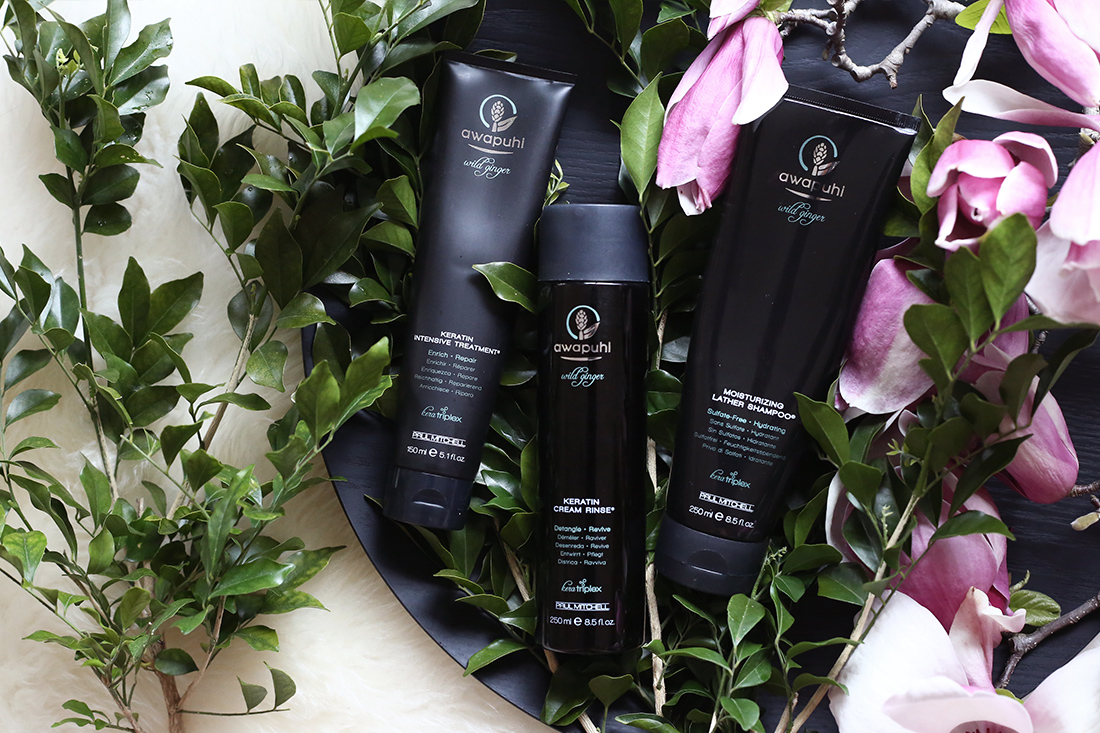
- Shampoo with the Awapuhi Wild Ginger Moisturizing Lather Shampoo ($22). Low-lather formula — don’t keep adding product chasing foam. Work it through the scalp in small sections and leave it on for 90 seconds before rinsing. Standard shampoo habits produce standard results here.
- Condition mid-shaft to ends only. Apply the Paul Mitchell Awapuhi Wild Ginger Hydrating Conditioner ($24) from the ears down on soaking-wet hair. Comb through with a wide-tooth comb, wait 3 minutes minimum, rinse with cool water. Applying to the scalp causes protein buildup at the follicle area and triggers increased oil production.
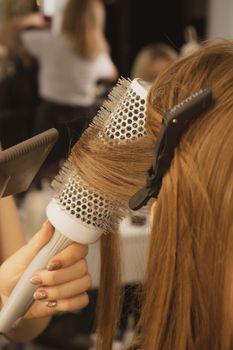
- Apply the Keratin Intensive Treatment ($45) on treatment days. Once weekly for the first month on heavily damaged hair, bi-weekly for maintenance after that. Apply to towel-dried hair, section it off, then use a blow dryer on medium heat. The heat step activates the keratin-awapuhi bond. Without it, you get basic conditioning and nothing more.
- Finish with the Styling Treatment Oil ($25) on dry hair. Two to three drops worked through the ends. Locks in the treatment, adds real shine, and controls humidity-driven frizz without heaviness. Apply after your hair is fully dry, not before.
Adjusting for Hair Porosity
High-porosity hair — bleached, heat-damaged, or chemically processed — absorbs protein readily. This routine works as written. Low-porosity hair resists absorption. If your hair feels stiff or rough after two weeks on this routine, cut the Keratin Intensive Treatment to once a month and alternate with a moisture-only mask. The SheaMoisture Manuka Honey and Mafura Oil Intensive Hydration Masque ($14) is a good alternating option at a fraction of the price.
How Often Is Too Often
Weekly is the ceiling for the treatment mask — not the default recommendation. Protein overload makes hair brittle, stiff, and prone to snapping. More frequent applications don’t speed up repair. They reverse it.
Paul Mitchell Awapuhi Products: Price vs. Performance
| Product | Retail Price | Best For | Skip If | Worth It? |
|---|---|---|---|---|
| Moisturizing Lather Shampoo | $22 | Color-treated, dry, or damaged hair | Oily scalp types | Yes |
| Hydrating Conditioner | $24 | Fine to medium hair needing moisture | Low-porosity hair prone to buildup | Yes |
| Keratin Intensive Treatment | $45 | Bleached, heat-damaged, coarse hair | Protein-sensitive or fine hair | Strongly yes |
| MirrorSmooth Shampoo | $26 | Frizz-prone, thick, coarse hair | Fine hair — noticeably weighs it down | Conditional |
| Styling Treatment Oil | $25 | Finishing, humidity protection, shine | Hair that already runs greasy | Yes |
The Keratin Intensive Treatment at $45 is the standout product in this line. A 5.1 oz tube lasts 8 to 10 applications for mid-length hair — roughly $4.50 to $5.60 per use. That’s competitive with most drugstore masks and significantly below salon-equivalent treatments that run $80 to $120 per session.
The MirrorSmooth Shampoo ($26) is the one to skip for most hair types. It contains more smoothing polymers than the standard shampoo, which delivers impressive early results but builds up faster with repeated use. Unless your hair is genuinely coarse and frizz-prone, the Moisturizing Lather Shampoo does more for $4 less.
Bottom Line: Start with the Keratin Intensive Treatment and Hydrating Conditioner ($69 combined). See how your hair responds over four weeks before adding anything else. Buying the full five-product lineup upfront is roughly $140 before you know whether your hair type responds well to this line at all.
Four Mistakes That Kill Your Results
- Skipping heat with the Keratin Intensive Treatment. This product requires heat to activate the keratin-awapuhi bond. Applying it to damp hair and air-drying gets you standard conditioning — not structural repair. A blow dryer on medium heat is the minimum. A heat cap works too. Without heat, you’re paying $45 for an average conditioner.
- Applying conditioner to the scalp. Awapuhi conditioners are formulated for the hair shaft, not the follicle area. Applied to the scalp, the proteins and emollients build up around the root, resulting in flat hair and an overactive sebaceous response — your scalp compensates by producing more oil. Mid-shaft to ends, consistently.
- Protein-loading hair that doesn’t need it. Low-porosity hair types and certain curl patterns — particularly 4B and 4C — don’t absorb proteins efficiently. Repeated application on these hair types causes stiffness, rough texture, and increased breakage that looks like product failure. It’s not. It’s protein overload. Switch to a moisture-only treatment for a few weeks to rebalance.
- Buying from gray-market resellers. Paul Mitchell has publicly documented diluted and counterfeit products sold through third-party Amazon listings. The brand recommends purchasing through licensed salons or their official site. The $4 to $6 price premium over an unauthorized listing is worth it — a diluted formula delivers none of the results and all of the cost.
When Awapuhi Wild Ginger Is Simply the Wrong Choice
Protein-sensitive hair — fine hair, hair that stiffened after any past keratin treatment, Type 4B and 4C curl patterns — should skip this ingredient. The Briogeo Don’t Despair, Repair! Deep Conditioning Mask ($38) delivers deep moisture without protein loading and is a far better fit. If a salon keratin treatment has ever left your hair brittle or worse than before, take that as a clear signal and choose a moisture-first line instead of this one.
How Awapuhi Compares to Argan Oil, Keratin, and Moroccanoil
Is Awapuhi Better Than Argan Oil?
Different jobs. Argan oil — the base of Moroccanoil Treatment ($46 for 3.4 oz) — is a surface treatment. It coats the hair shaft, adds shine, and controls frizz on contact. It doesn’t penetrate or structurally repair. Awapuhi goes deeper, working with the hair’s protein structure rather than just coating it. For genuinely damaged hair, awapuhi addresses the underlying problem; Moroccanoil makes it look better temporarily. If budget allows, use both: awapuhi on treatment wash days, a few drops of Moroccanoil as a daily finishing step on dry hair. They don’t compete — they stack well.
How Does It Compare to Professional Keratin Treatments?
Salon keratin treatments — Brazilian blowouts and similar services — typically use formaldehyde or formaldehyde-releasing compounds to permanently reshape the hair’s protein bonds. Results last three to six months but require commitment, processing time, and carry chemical exposure considerations. At the retail end, something like the Kérastase Nutritive Masque ($54) offers deep conditioning without the chemical process, though it’s moisture-focused rather than repair-focused.
Awapuhi-keratin home treatments are temporary — they work cumulatively with each wash and reset gradually. No commitment, no processing risk, no locked-in result you might regret. If you want permanent frizz elimination and are prepared for a chemical process, awapuhi home treatment isn’t the right tool. If you want progressive, reversible structural improvement, it is.
What About OGX Awapuhi Ginger Shampoo ($9)?
OGX’s awapuhi line uses the same botanical extract at substantially lower concentration, built on a heavier silicone base. The result is a reasonable general moisturizing shampoo — not a repair treatment. For someone who wants to test how their hair responds to awapuhi before spending $45, the OGX line is a low-risk entry point. Understand that you’re testing the ingredient at a fraction of the dose in Paul Mitchell’s formulation. A positive response to OGX confirms the ingredient suits your hair. It doesn’t guarantee equivalent results from a higher-concentration product, nor predict the reverse.
The botanical hair care space is moving fast. Newer brands are combining awapuhi with rice protein, quinoa hydrolysate, and other plant-derived keratin analogs — and early results for high-porosity and textured hair types look promising. Awapuhi’s mechanism is well-documented, but within a few years there will be comparative data on whether these combination formulas outperform single-ingredient approaches for specific damage profiles. The Paul Mitchell Keratin Intensive Treatment sets the current benchmark, but it won’t hold that position unchallenged indefinitely.