Your eyebrows do more work than any other feature on your face. They frame everything — your eyes, your expression, your entire makeup look. Get them right and the rest of your face falls into place. Get them wrong and nothing else saves it.
This isn’t about chasing a trend. The goal is brows that look like yours, just sharper, cleaner, and more intentional.
Why Eyebrows Are the Fastest Fix in Your Makeup Bag
Most people treat foundation as the base of a good makeup look. It’s not. Brows are. Research on facial recognition consistently shows that eyebrows are the feature humans process first — before eyes, nose, or lips. They carry expression before you say a word. One study found that people had more difficulty recognizing faces when eyebrows were removed than when eyes were removed entirely.
The practical payoff is real. Even a two-minute fill with a good pencil changes the perceived symmetry of your entire face. You don’t need contouring, lash extensions, or full-coverage foundation if your brows are clean and defined.
The Three Points That Define Every Brow
Forget everything complicated. Three points define every good brow:
- Head: where the brow starts, aligned vertically above the inner corner of your eye
- Arch: the highest point, roughly above the outer edge of your iris
- Tail: the endpoint, aligned diagonally from the outer corner of your nose through the outer corner of your eye
Every brow technique is about filling in, defining, or enhancing those three points. The tail matters most. A tail that ends too short makes the eye look smaller and the face wider. One that droops below the start point creates a tired, pulled-down look. Most brow problems trace straight back to a badly placed tail.
What Changes When You Actually Get Brows Right
Defined brows add structure to soft features. They make eyes look larger and more awake without any eye makeup at all. For anyone with sparse growth, over-tweezed brows, or naturally light coloring — blondes and redheads especially — even a minimal fill creates more visual impact than a full eyeshadow look.
Charlotte Tilbury calls brows the scaffolding of the face. That framing is accurate. You can build anything on top of good scaffolding. Without it, even a skilled eye look feels unfinished.
Brow trends cycle hard — the pencil-thin nineties line, the drawn-on Instagram arch, the overly groomed noughties slope — and they all age badly. Clean, defined, and proportionate to your face never goes out of style. That’s the standard worth aiming for, not whatever is circulating on social media this week.
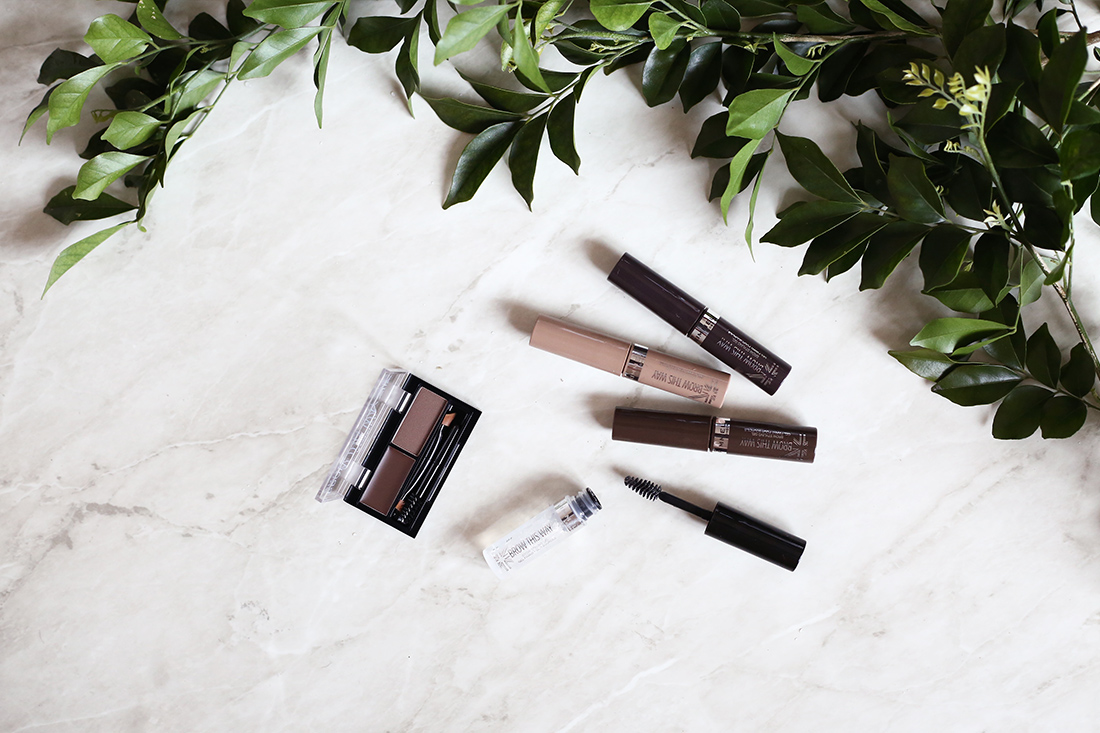
Pencil, Pomade, or Powder: Which Brow Product Actually Works?
The product format matters more than technique. Using the wrong one for your brow type is the most common reason results look off — too harsh, too patchy, or barely visible by midday.
| Product Type | Best For | Finish | Best Product | Price |
|---|---|---|---|---|
| Micro Pencil | Sparse brows, hair-stroke detail | Natural, defined | Anastasia Beverly Hills Brow Wiz | ~$23 |
| Fiber Gel | Full brows needing hold and volume | Fluffy, textured | Benefit Gimme Brow+ Volumizing Fiber Gel | ~$26 |
| Pomade | Bold definition, all-day wear | Sculpted, strong | Anastasia Beverly Hills Dipbrow Pomade | ~$24 |
| Tinted Gel | Quick grooming, subtle color | Groomed, natural | Glossier Boy Brow | ~$22 |
| Lamination Gel | Fluffy lifted look | Defined, feathery | REFY Brow Sculpt | ~$22 |
| Budget Pencil | Beginners and everyday use | Natural to defined | Maybelline Brow Ultra Slim | ~$9 |
The micro pencil is the most versatile tool available. The Anastasia Beverly Hills Brow Wiz has a 0.08mm tip — fine enough to draw individual hair strokes rather than blocks of color. It comes in 22 shades. It is the correct starting point for most people who want natural-looking defined results. For beginners, the Maybelline Brow Ultra Slim at ~$9 performs surprisingly close to the Anastasia at less than half the price. Start there before spending more.
Pomade is for long wear and strong definition — not for soft or natural-looking brows. The Dipbrow Pomade won’t move through humidity, sweat, or a full day. That’s its entire value. But pomade mistakes are harder to fix than pencil mistakes, and the margin between defined and drawn-on is thin. Use a stiff angled brush rather than a spoolie, and build slowly.
Glossier Boy Brow and REFY Brow Sculpt both serve people who have naturally full brows and want grooming without heavy color. Neither product adds significant pigment. If you have genuinely sparse brows, these won’t give you the coverage you need. If your brows just need to be tamed and set in place, they’re all you need.
The One Brow Mapping Rule Worth Learning
Hold a straight edge from your nostril to your inner eye corner — that’s the head. Angle it from your nostril through the outer corner of your eye — that’s the tail. The arch sits above the outer edge of your iris. Mark those three points lightly with a white eyeliner or light pencil. Fill between them. Every professional brow appointment uses some version of this same mapping. You can do it in sixty seconds before applying any product, and it eliminates most of the guesswork that causes uneven or misplaced brows.
Five Brow Mistakes That Are Holding Your Look Back
Most brow problems come from the same five errors. Fix even one and you’ll see an immediate difference.
- Using the wrong shade. The most widespread mistake. Go one shade lighter than your natural hair color for a softer, more believable result — especially if you have dark hair. Using a black or near-black product on dark brows looks theatrical, not polished. Blondes and redheads should go one shade darker than their hair to register visible definition without looking overdone.
- Filling from the head inward. Starting at the inner head creates brows that are too heavy at the front — the exact opposite of how natural hair grows. Start at the arch, work toward the tail with firmer strokes, then feather the head last with the lightest possible pressure. The tail and arch should be the most defined areas. The head should be the softest.
- Shortening the tail. Short tails close in the eye and make the face look wider. The tail should always extend to that diagonal reference line from nose to outer eye corner. If you have been removing hair past that point, expect roughly three months for full regrowth.
- Skipping the brow bone cleanup. A small amount of matte concealer just below the arch — applied with a small flat brush — lifts the brow, sharpens definition, and removes any stray pigment below the line. This one step accounts for much of the visible difference between at-home brows and professionally finished brows. The L’Oreal Unbelieva-Brow gel (~$10) pairs well with this step for a clean, set finish.
- Tweezing in a magnifying mirror. Most people do this. The problem: magnification removes context. You can’t assess symmetry without seeing your whole face at once. Tweeze at arm’s length in a regular mirror. You will remove far less hair than you otherwise would — and that is the correct outcome.
How to Fill In Sparse Brows Without Looking Drawn On
What is the difference between hair strokes and block fill?
Hair strokes are short, light flicks applied in the direction of brow growth. Block fill is dragging product across the brow in a solid pass. Hair strokes look like real hair. Block fill looks like a stamp. The Anastasia Brow Wiz’s 0.08mm tip exists specifically for hair-stroke work — if you’re dragging it flat like a regular eyeliner, you are not using it correctly. Use light pressure, flick upward through the brow, vary the direction of strokes slightly. Overlap them. The goal is texture and dimension, not a solid filled shape.
Should I use concealer to clean up brow edges?
Yes. Every professional does this. A small flat brush loaded with matte concealer — run just below the lower brow edge and just above the upper edge — removes stray pigment, sharpens the line, and lifts the brow visually without adding any new product. This single step accounts for most of the visible gap between home brows and professionally finished brows. It takes about thirty seconds. Skip it and even a technically clean brow fill looks less polished than it should.
How do you stop brow product from looking patchy?
Patchy application usually means dry brow skin or too much product in one pass. Exfoliate the brow area lightly two to three times a week — a soft toothbrush with gentle pressure is enough. Apply brow product in two thin layers rather than one heavy one. With fiber gels like the Benefit Gimme Brow+, comb through the hairs in the direction of growth first, then apply a second pass for volume. Going in heavy once gives you clumps and patches. Light layering gives you control.
Threading, Waxing, or Microblading: What Is Actually Worth Your Money
DIY maintenance works fine once the shape is established. The hard part is getting the right shape in the first place — especially after years of over-tweezing or with naturally asymmetrical growth patterns.
Threading vs. waxing: which gives better precision?
Threading uses twisted cotton thread to remove individual hairs at the root. It’s more precise than waxing and works without heat or chemicals, making it the better option for sensitive skin and for anyone using retinol, AHAs, or other exfoliating actives that thin the skin. Waxing is faster and handles thick or coarse hair more efficiently, but repeated waxing over years gradually removes the fine vellus hair around the brow that softens the overall shape. For clean, precise brow shaping, threading is the better long-term choice.
When is microblading actually worth the cost?
Microblading deposits semi-permanent pigment under the skin in hair-like strokes. Results last 12 to 18 months depending on skin type, with oily skin fading faster. Cost runs $300 to $700 depending on the artist and location. It’s the right choice if you have genuinely sparse brows from years of over-tweezing, from alopecia, or from medical treatment. It is not the right choice if you have functional brows and just want sharper daily definition — that’s what products are for, and they adjust with your preferences. Microblading locks you into one shape for over a year, and a poor result is difficult and expensive to correct.
How often should brows be professionally shaped?
Every four to six weeks is the standard. Hair regrows at roughly 0.14mm per day, so after six weeks you’ll have around 6mm of new growth — enough for a skilled technician to work with intentionally. Between appointments, remove only clear stray hairs that fall well outside the established shape boundary. Leave anything near the main brow alone. Over-tweezing between appointments is the single fastest route to permanently thinned brows.
The right daily kit for most people is straightforward: the Anastasia Beverly Hills Brow Wiz for precise hair-stroke definition, the Benefit Gimme Brow+ for texture and hold if you want a fluffier finish, and a small flat brush with matte concealer to clean the edges. Get professionally shaped every five weeks. Maintain at home with those three tools. That covers everything.